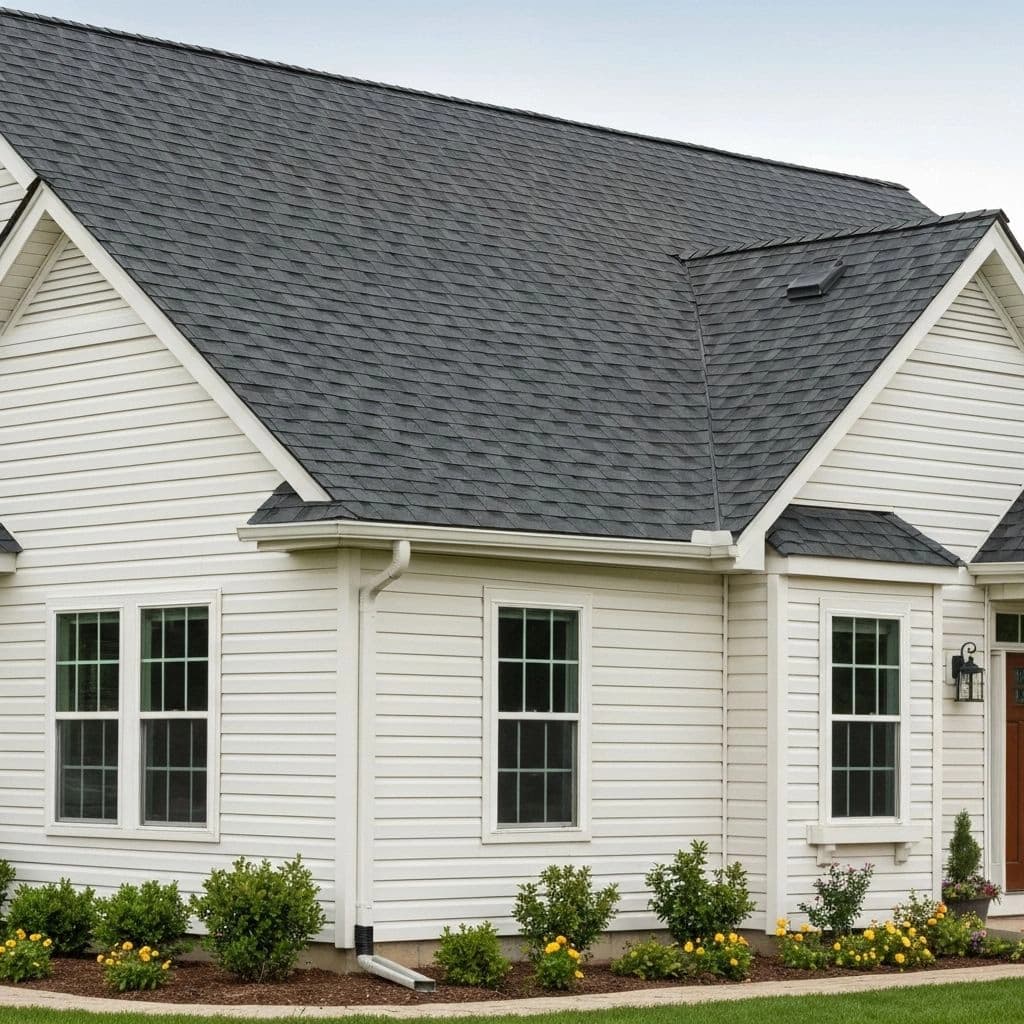
How Indiana Weather Affects Your Roof, Siding, and Gutters
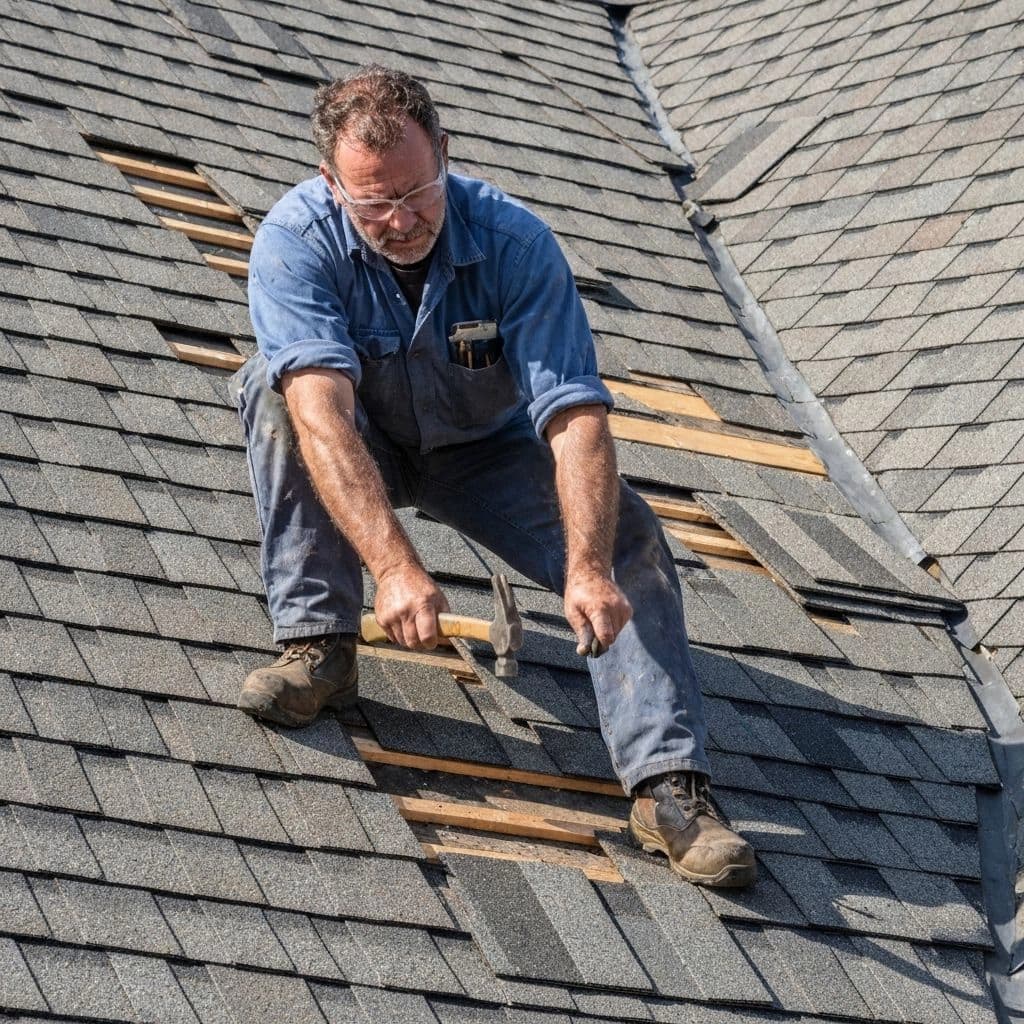
Indiana is genuinely hard on building materials, and not for the reason most people assume. It is not extreme heat or extreme cold. It is the constant switching between them.
Six forces do most of the damage here:
| Force | Primary Target | What It Does |
|---|---|---|
| Freeze-thaw cycling | Everything | Widens every existing gap, roughly 35 times a year |
| Hail | Roof, siding | Strips granules, cracks shingles, dents panels |
| Straight-line wind | Roof, gutters | Lifts shingles, breaks seals, pulls gutters loose |
| Humidity | Roof, siding | Feeds algae and moss, holds moisture in cavities |
| UV and heat swing | Roof, siding, sealants | Breaks down binders, makes materials brittle |
| Snow and ice load | Roof, gutters | Adds weight, drives ice dams at the eaves |
Freeze-Thaw: The One That Matters Most
Water expands by about 9% when it freezes. That expansion happens inside any gap it has seeped into: a hairline crack in caulk, the space under a lifted shingle edge, a seam in a gutter, a pinhole in flashing sealant.
Each cycle widens the gap slightly. The wider gap admits more water. The next freeze widens it further. Roughly 35 times a year, every year.
This is the single best argument for fixing small problems promptly in this climate. A cracked pipe boot in a stable climate is a minor issue that stays minor. Here it is a countdown.
On the roof, it lifts shingle edges, loosens flashing, degrades sealant, and drives ice dam formation when combined with poor attic ventilation.
On siding, it works into gaps at joints and around penetrations, and moisture trapped behind a panel that freezes will push the panel outward.
On gutters, it splits seams, deforms sections under ice weight, and pulls hangers loose from the fascia.
Hail
Northeast Indiana sits in an active hail corridor, with significant events every few years and smaller ones more often.
The damage is frequently invisible from the ground, which is what makes it dangerous. Hail knocks the ceramic granules off asphalt shingles, and those granules are the UV protection. Once they are gone, the asphalt underneath degrades rapidly. The shingle looks broadly intact from your driveway while its remaining life has been meaningfully shortened.
Hail also creates micro-fractures that admit water, dents metal, and cracks the more brittle siding materials. Vinyl becomes more susceptible to cracking in cold weather, so a spring hail event can do more siding damage than a summer one of the same intensity.
A significant hailstorm can take several years off a roof's usable life without causing a single visible leak.
Wind
Straight-line winds and microbursts are routine here during storm season. Wind does not load a roof evenly. Edges, corners, and the ridge take disproportionate pressure, which is why failures start there.
Most asphalt shingle wind damage begins around 60 mph, though aged or already-compromised roofs lose shingles well below that. The critical detail is that a shingle does not have to blow off to be damaged. Once wind breaks the adhesive seal, that tab will lift again in every subsequent wind, and water gets underneath each time.
Wind also pulls gutters away from the fascia and lifts flashing around penetrations. Our guide on checking your roof after a wind storm covers what to look for.
Snow and Ice Load
Snow itself is rarely a structural concern on a sound roof. Wet snow weighs considerably more than dry powder, and an ice layer weighs more still, but a properly framed roof handles a normal Indiana winter without difficulty.
Where load becomes a real problem is at the eaves, and it is the ice dam mechanism again. Heat escaping through an under-ventilated attic melts snow on the upper roof. That meltwater runs down to the overhang, which is cold because there is no living space beneath it, and refreezes. The ridge of ice that builds up there is heavy, it traps standing water behind it, and that water works backward under the shingles.
The damage shows up as ceiling stains, wet insulation, rotted decking, and gutters pulled loose under the ice weight. Note that none of it is really caused by cold weather. It is caused by heat leaving the house, which is why ventilation and insulation fix ice dams and roof rakes only manage the symptom.
Older homes with minimal attic insulation and blocked soffit vents are the most affected, which describes a large share of the housing stock in this part of Indiana.
Humidity
Indiana summers are humid enough to matter, and the effects are slower but real.
Algae growth produces the black streaking common on north-facing slopes. It is largely cosmetic. Moss is the more serious version, because it lifts shingle edges and holds moisture against the roof surface continuously.
Humidity also matters inside the building envelope. Moisture that gets behind siding or into an under-ventilated attic does not dry out readily, and persistent trapped moisture leads to rot in sheathing, soffit, and fascia.
UV and Temperature Swing
Indiana is not the desert, but there is enough UV to break down the asphalt binder in shingles and degrade the plasticizers in vinyl siding. South and west facing elevations age noticeably faster than north facing ones, sometimes by years.
The bigger stressor is the daily swing. A dark roof surface can move through a very wide temperature range between afternoon and pre-dawn, and materials expand and contract with it. That constant dimensional movement is what fatigues sealants and works fasteners loose over time.
What Holds Up Best Here
Roofing. Architectural asphalt shingles are the practical default, with meaningfully better wind and impact resistance than three-tab. Impact-resistant Class 4 shingles cost more but hold up better to hail and sometimes earn an insurance discount. Standing seam metal outlasts everything else by a wide margin. Our breakdown of how long roofs last in Indiana covers realistic lifespans, and the metal versus shingles comparison covers that tradeoff.
Siding. Quality vinyl performs well for the money if the thickness is adequate, since thin panels crack in cold weather impacts. Fiber cement handles freeze-thaw and impact better but costs more and needs periodic repainting. We compared them directly in our vinyl versus fiber cement guide.
Gutters. Seamless aluminum is the right answer in a freeze-thaw climate, simply because seams are where ice splits things. Sizing matters too, since undersized gutters overflow during the heavy downpours we get.
The variable that outweighs material choice, though, is installation quality and ventilation. A well-installed mid-grade roof with proper attic ventilation will outlast a premium roof installed badly on a roof deck that cannot breathe.
Working With the Seasons
Each season stresses different things, and each has a maintenance window.
Spring brings the first severe storms. Inspect after each significant event.
Summer brings UV, heat, and hail. This is when algae and moss become visible.
Fall is the critical preparation window. Gutters, ventilation, and any outstanding repairs need to be handled before the first freeze.
Winter is freeze-thaw and ice dam season, and the season when deferred maintenance from the other three collects its bill.
For a full year-round view, our home exterior maintenance checklist organizes it by season, and the signs you need new siding guide covers what weathering looks like on walls specifically.
Common Questions
Does Indiana weather really shorten roof life that much?
Yes. Manufacturer lifespan figures assume favorable conditions. In practice, architectural shingles that carry a 30-year designation typically deliver 20 to 28 years here, and less if ventilation is poor or storm damage goes unrepaired.
Which direction of my house takes the most damage?
South and west elevations take the most UV and heat. North-facing slopes stay damp longer and grow more algae and moss. Wind damage concentrates on whichever side faces the prevailing storm track, generally west and southwest here.
Is metal roofing worth the extra cost in Indiana?
For a long-term hold, often yes. Standing seam handles freeze-thaw, sheds snow well, and lasts decades longer than asphalt. The higher upfront cost makes less sense if you expect to move within several years.
How do I know if my attic ventilation is adequate?
On a hot day, your attic should not be dramatically hotter than outside. Ventilation requires both intake at the soffits and exhaust at the ridge, and blocked soffit vents are extremely common. This is worth having assessed, because it affects roof life more than almost anything else you control.
Should I inspect after every storm?
After significant wind or hail, yes. Damage is often invisible from the ground, and finding it early keeps the repair small and keeps documentation current.
HomeAid Exteriors has served Fort Wayne and northeast Indiana with over a decade of experience in roofing, siding, and gutters. We know what this climate does, because we repair it. Financing is available.
Get a Free Exterior Inspection
Roof, siding, and gutters assessed together, with photos and an honest read on what needs attention now versus later. Call (260) 385-6968.
Serving Fort Wayne & Northeast Indiana
Auburn, Columbia City, Churubusco, Huntington, Bluffton, New Haven and the surrounding communities.