8 Signs You Need New Siding (Fort Wayne Homeowner Guide)
Your siding is the largest surface area on your home's exterior. When it starts failing, it doesn't just look bad — it lets moisture in, drives up energy bills, and creates problems that get expensive fast. The tricky part is that siding can fail slowly, and by the time the damage is obvious, you've often got bigger issues behind the panels.
Here are the eight signs we see most often on Fort Wayne homes — and what each one means for your next step.
1. Cracks, Holes, or Missing Pieces
This is the most obvious sign, and it's the one we get called about most often — especially after hailstorms.
Vinyl siding cracks on impact, particularly in cold weather when the material is more brittle. A single cracked panel from a baseball is a repair. An entire side of the house cracked from hail is a replacement — and likely an insurance claim.
Fiber cement siding is much more impact-resistant, but it can chip at the edges during installation or from severe impact. Chips in fiber cement expose the raw material to moisture, which can cause localized damage if not sealed.
Wood siding splits and cracks as it ages, especially if it hasn't been painted or stained regularly. Cracks in wood are an entry point for water and insects.
When to act: One or two cracked panels? Repair. Multiple cracks across a large area, or damage on several sides of the house? Time to talk about replacement.
2. Warping, Buckling, or Bulging
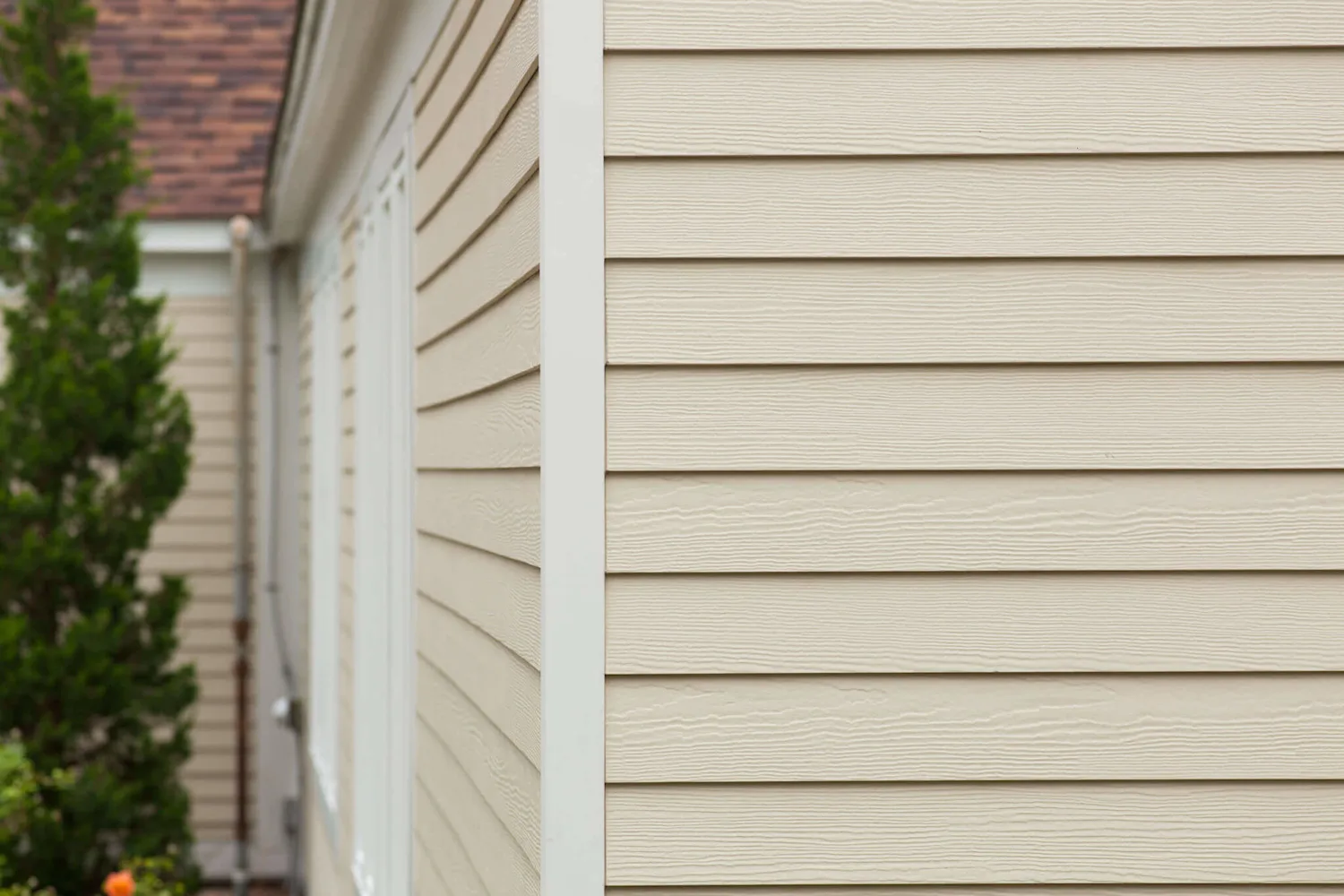
Run your eye along the wall from a corner of the house. The siding should lay flat. If you see panels that are wavy, bowed out, or rippling, there's a problem.
What causes it:
- Vinyl siding warps from heat — usually on south- or west-facing walls that get direct afternoon sun. It can also buckle if it was nailed too tightly during installation (vinyl needs room to expand and contract).
- Wood siding warps from moisture absorption. Once wood siding starts warping, it's pulling away from the wall and letting water in behind it.
Warped siding isn't just cosmetic. Panels that don't lay flat create gaps where wind-driven rain gets behind the siding and into your wall cavity. That leads to mold, rot, and insulation damage you can't see from outside.
When to act: A panel or two that were poorly installed can be re-hung. Widespread warping usually means the siding material has reached the end of its life.
3. Fading and Discoloration
Some fading is normal over time — siding that's been in the sun for 15 years won't look as vibrant as day one. But excessive or uneven fading tells you the siding's protective coatings have broken down.
Once the UV protection is gone:
- Vinyl becomes more brittle and prone to cracking
- Wood loses its paint adhesion faster, leading to peeling
- Fiber cement holds up the best, but even factory finishes degrade eventually
The real concern with severe fading is that it usually means the siding is approaching the end of its useful life. If one side of the house looks dramatically different from the other, the sun-exposed side is probably ready for replacement even if the north side has years left.
When to act: Cosmetic fading alone isn't urgent. But if fading comes with brittleness, cracking, or chalking (white powder rubbing off when you touch it), the material is degrading.
4. Peeling Paint or Loose Wallpaper Inside
This one surprises homeowners because the damage appears inside, not outside.
If paint is peeling on interior walls near the exterior, or wallpaper is bubbling near outside walls, moisture is getting through your siding and into the wall cavity. By the time you see it inside, the problem has been going on for a while.
Common causes:
- Failed caulking around window and door frames
- Cracked or missing siding allowing water penetration
- No house wrap or deteriorated house wrap behind the siding
This is a sign to act quickly. Moisture in wall cavities leads to mold growth, structural wood rot, and insulation damage — all of which are far more expensive to fix than the siding itself.
When to act: Now. Interior moisture signs mean water is already inside your walls. Have the exterior inspected immediately.
5. Rot (Wood Siding)
If you have wood siding, take a screwdriver and probe the bottom edges of panels in a few spots — particularly near the ground, around windows, and under eaves. If the wood is soft, spongy, or the screwdriver pushes in easily, rot has started.
Rot in wood siding spreads. It starts at moisture-prone areas and works its way into the sheathing and framing behind the siding. What starts as a soft spot on one panel can become a structural issue if left unchecked.
When to act: Localized rot on a few boards can be cut out and replaced. If rot is widespread — multiple walls, around multiple windows, or if you can feel soft spots in the sheathing behind the siding — full replacement is the better investment. Many homeowners with rotting wood siding switch to vinyl or fiber cement during replacement to avoid this problem going forward.
6. High or Rising Energy Bills
Your siding is part of your home's thermal envelope. When it fails, your insulation can't do its job properly. Signs that your siding is contributing to energy loss:
- Drafts near exterior walls (not just windows)
- Rooms that are noticeably hotter or colder than the rest of the house
- HVAC system running constantly to maintain temperature
- Heating and cooling bills climbing without a rate increase explaining it
Siding that's cracked, warped, or no longer sealed properly lets air infiltrate your wall cavities. Even if the insulation behind it is in good shape, air movement through the insulation reduces its effectiveness dramatically.
New siding with proper house wrap creates a tighter envelope. Homeowners frequently tell us their energy bills dropped noticeably after a full re-side — especially on older homes where the original siding was installed without modern house wrap.
When to act: If you've ruled out windows, attic insulation, and HVAC issues, your siding may be the culprit. A home exterior inspection can identify air infiltration points.
7. Mold, Mildew, or Fungus Growth
Green or black spots on your siding, especially in shaded areas, are common and usually just surface growth that can be power-washed away. That's maintenance, not a crisis.
The concern is when mold or fungus is growing at seams, under panels, or near the bottom edge where siding meets the foundation. This suggests moisture is getting trapped behind the siding and not drying out — the conditions that lead to wall cavity mold and structural rot.
Check around and below the mold growth for soft spots, swelling, or panels that give when you push on them. If the area behind the siding is holding moisture, cleaning the surface won't solve the problem.
When to act: Surface mold that comes back quickly after cleaning suggests a moisture problem behind the siding. If multiple areas of the house have persistent mold or mildew growth, investigation is warranted — and replacement may be the answer.
8. Your Siding Is Over 20 Years Old
Age alone isn't always a reason to replace siding, but it's the context that makes every other sign on this list more concerning.
Typical siding lifespans in Indiana's climate:
| Material | Expected Lifespan |
|---|---|
| Vinyl | 20 – 30 years |
| Fiber Cement | 30 – 50+ years |
| Wood (maintained) | 15 – 30 years |
| Aluminum | 25 – 40 years |
If your siding is approaching or past these ranges and you're seeing any of the signs above, it's usually past the point where repairs make sense. The material has aged, the seals have degraded, and problems will keep coming.
When to act: Siding over 20 years old that's showing multiple issues is a candidate for replacement. If it's 15 years old with one localized problem, repair it and plan for replacement down the road.
What to Do If You See These Signs
Step 1: Don't panic. Not every siding issue is an emergency. But don't ignore it either — water damage compounds quickly.
Step 2: Check for storm damage. If the damage appeared after a storm (hail, wind, fallen branches), it may be covered by homeowners insurance. We handle insurance claims for siding regularly and can help you determine if a claim is warranted.
Step 3: Get an inspection. We'll come out, look at the siding condition on all sides of the house, check behind panels if needed, assess the fascia and soffit, and give you an honest recommendation — repair or replace.
Step 4: Know your options. If replacement is the answer, you've got choices. We install vinyl, fiber cement, and other siding materials, and we'll help you pick the right one for your budget and goals. Our vinyl vs. fiber cement comparison breaks down the decision in detail.
Common Questions
Can damaged siding be repaired instead of replaced?
Yes, in many cases. Individual cracked or broken panels can be replaced if matching material is available. Localized rot in wood siding can be cut out and patched. However, if damage is widespread, the siding is old, or you're seeing signs of moisture behind the panels, full replacement is usually more cost-effective than repeated repairs.
How much does siding replacement cost in Fort Wayne?
Full siding replacement in Fort Wayne typically costs $8,000–$16,000 for vinyl and $16,000–$30,000+ for fiber cement on an average-sized home. Cost varies based on home size, material choice, complexity (stories, corners, trim), and whether existing siding needs removal. See our siding replacement cost guide for Indiana for a full breakdown by material and home size.
Does new siding increase home value?
Yes. Siding replacement consistently ranks among the highest-ROI exterior projects. Fiber cement siding replacement recoups roughly 80–90% of its cost at resale, and vinyl recoups around 70–80%. Beyond the numbers, curb appeal drives first impressions — buyers notice failing siding immediately.
Should I replace siding and windows at the same time?
If both need attention, doing them together saves money on labor since the crew is already working on your exterior. It also ensures proper integration between the window flashing and siding — a common source of water leaks when done separately. We regularly handle combined siding and window projects.
How can I tell if my siding damage is covered by insurance?
If the damage was caused by a storm event (hail, wind, fallen trees), it's likely covered under your homeowners policy. Damage from age, wear-and-tear, or neglected maintenance is not covered. The simplest way to find out is to have us inspect the damage — we can identify storm damage vs. age-related deterioration and advise on whether a claim makes sense.
Get Your Siding Inspected for Free
Not sure what's going on with your siding? We'll come take a look. Our inspection covers all sides of the house, checks for underlying moisture issues, and gives you a clear picture of where things stand.
At HomeAid Exteriors, we've been Fort Wayne's siding contractor since 2013. Whether it's a quick repair or a full replacement, we'll give you an honest recommendation and a fair quote. Serving homeowners across Fort Wayne and all of northeast Indiana.
The inspection is free. Let's figure out what your siding needs.
Fort Wayne Siding Installation & Replacement
Vinyl, fiber cement, and engineered wood siding installed by a local crew. Free estimates and honest assessments across northeast Indiana.
Get a Free Siding Inspection
Seeing a few of these warning signs? We'll inspect all sides of your home, check for hidden moisture issues, and tell you honestly whether it's a repair or a replacement. Call (260) 385-6968.