Vinyl vs. Fiber Cement Siding in Fort Wayne
For most Fort Wayne homes, fiber cement siding is the better long-term investment — it outperforms vinyl in hail resistance, lifespan (30–50 years vs. 20–30), and curb appeal. Vinyl wins on upfront cost, typically running half the price installed. The right choice depends on your budget, how long you plan to stay, and how much Indiana weather your siding needs to handle.
We install both regularly, so we don't have a horse in this race. But after over a decade of doing this, we've seen how each one holds up to Indiana's weather, and we have some strong opinions. Let's walk through the whole thing.
Which Siding Is Better: Vinyl or Fiber Cement?
If you're in a hurry, here's where things land:
| Vinyl Siding | Fiber Cement Siding | |
|---|---|---|
| Upfront Cost | $4 – $8 per sq ft installed | $8 – $14 per sq ft installed |
| Lifespan | 20 – 30 years | 30 – 50+ years |
| Maintenance | Very low — occasional washing | Low — repaint every 10–15 years |
| Hail Resistance | Moderate — can crack | High — very impact-resistant |
| Freeze-Thaw | Good, but can become brittle | Excellent |
| Look & Feel | Good variety, lighter feel | Premium, wood-grain texture |
| Best For | Budget-conscious, low maintenance | Long-term value, curb appeal |
Now let's get into the details.
What Are the Pros and Cons of Vinyl Siding?
Vinyl siding has been the go-to for decades, and there's a reason for that. It's affordable, it comes in a huge range of colors and styles, and you basically never have to paint it. For a lot of homeowners, that checks every box.
The Pros
- Cost. This is the big one. Vinyl is typically half the price of fiber cement installed. For a full siding replacement on an average Fort Wayne home, you could save $8,000 to $15,000 by going with vinyl.
- Zero painting. The color goes all the way through the material, so scratches don't show and you never need to repaint.
- Lightweight and easy to install. That means slightly lower labor costs and faster installation.
- Tons of options. Colors, profiles, textures — vinyl has come a long way from the flat, shiny stuff people put up in the '90s.
The Cons
- Can crack in extreme cold. Indiana winters get brutal, and vinyl can become brittle when temperatures drop below freezing. A stray baseball or a chunk of ice at the wrong time can crack a panel.
- Hail vulnerability. This is the one we see most often. After a hailstorm, vinyl siding can end up with cracks and holes that weren't there the morning before.
- Heat sensitivity. Vinyl can warp if it's near a grill, a fire pit, or even in direct sun on a south-facing wall during peak summer. It doesn't happen often, but we've seen it.
- Shorter lifespan. You'll get 20–30 solid years out of good vinyl, but it won't last as long as fiber cement.
What Are the Pros and Cons of Fiber Cement Siding?
Fiber cement (most people know it as James Hardie or HardiePlank, though there are other brands) is made from a mix of cement, sand, and cellulose fibers. It's heavier, harder, and more expensive — but it performs at a different level.
The Pros
- Durability. This stuff is tough. It doesn't crack from hail the way vinyl does, it doesn't warp in the heat, and it handles freeze-thaw cycles without flinching.
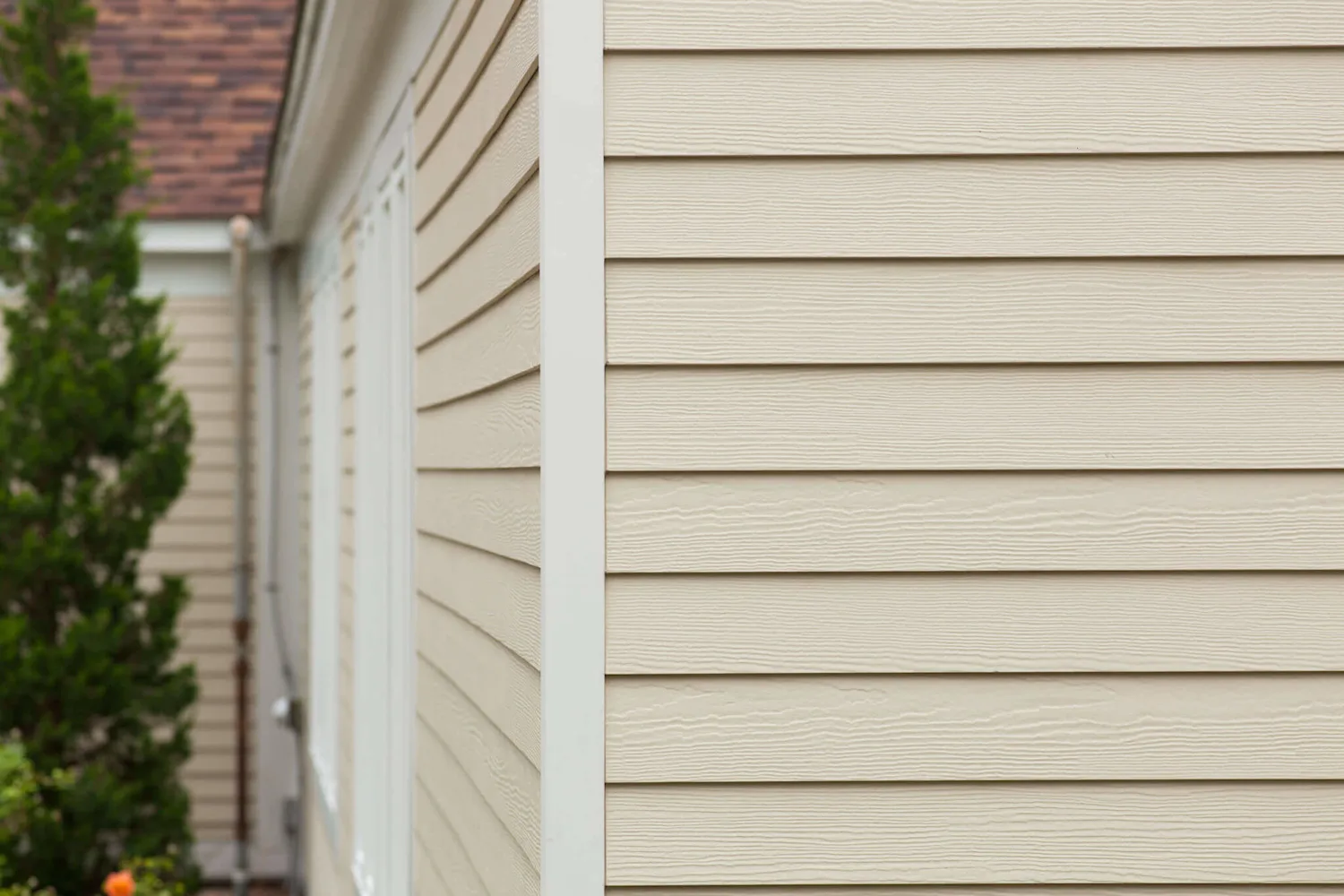
- Looks like real wood. The wood-grain textures on fiber cement are convincing. From the street, it's hard to tell the difference between fiber cement and painted cedar — but fiber cement won't rot, split, or attract termites.
- Holds paint beautifully. When it does need repainting (every 10–15 years), the surface takes paint better than just about any other siding material.
- Fire resistant. It's literally made of cement. It won't melt, burn, or contribute to a fire spreading.
- Adds real value. If you ever sell, fiber cement siding is a strong selling point. Buyers notice the difference.
The Cons
- Cost. No getting around it — fiber cement is roughly double the price of vinyl, installed. The material itself costs more, and it's heavier, so labor runs higher too.
- You will need to repaint eventually. Factory-applied finishes last 10–15 years, and then you're looking at a repaint. It's not a huge expense, but it's maintenance vinyl doesn't require.
- Heavier installation. It takes more labor and equipment to install fiber cement. That's factored into the price, but it also means the project takes a bit longer.
How Does Each Siding Handle Indiana Weather?
This is where the conversation gets real. Indiana doesn't have one kind of weather — we have all of them. Hot summers, freezing winters, high humidity, and hail that shows up whenever it wants. Here's how each material holds up:
Freeze-Thaw Cycles
Every winter, water finds its way into tiny cracks and gaps. Then it freezes, expands, and makes those cracks bigger. This happens dozens of times between November and March.
Fiber cement handles this extremely well. It's a dense, rigid material that doesn't absorb much moisture when properly installed and painted.
Vinyl performs fine in normal conditions, but it gets more brittle as temperatures drop. That's when it's most vulnerable to impact damage — a tree branch, a piece of ice, or hail hitting cold vinyl can crack it.
Hail
Northeast Indiana takes a beating from hailstorms, especially in spring and early summer. This is where we see the biggest difference between the two materials.
Fiber cement is significantly more impact-resistant. It takes a serious hailstone to damage it.
Vinyl is more likely to crack from hail. We've replaced a lot of vinyl siding after storms that didn't touch the fiber cement homes next door.
Heat and Humidity
Indiana summers bring both — 90-degree days with humidity that makes everything feel heavier.
Fiber cement doesn't warp, expand, or react to heat. It just sits there and does its job.
Vinyl can warp near heat sources or in extreme direct sun exposure. It's not common, but on a dark-colored south-facing wall, we've seen panels soften and distort.
What Does It Actually Cost in Fort Wayne?
Here's a realistic range for a full siding replacement on an average-sized Fort Wayne home (roughly 1,500 – 2,000 sq ft of siding):
| Material | Estimated Total Cost |
|---|---|
| Vinyl Siding | $8,000 – $16,000 |
| Fiber Cement Siding | $16,000 – $30,000+ |
These ranges include everything — materials, labor, tear-off of old siding, trim, and cleanup. The wide range is because every house is different. Homes with a lot of windows, corners, dormers, or multiple stories take more labor and material. According to Remodeling Magazine's Cost vs. Value Report, fiber cement siding replacement consistently recoups a higher percentage of its cost at resale than vinyl — another reason it's a strong long-term investment. For a full cost breakdown by material and home size, see our siding replacement cost guide for Indiana.
What About Just the Damaged Sections?
If your siding took a hit from hail or impact and the damage is limited to one side of the house, a partial replacement might make sense. We do plenty of siding repairs where we match the existing material and just replace what's needed. That can save a lot versus doing the whole house.
What Do Fort Wayne Homeowners Say About Each Siding?
We've had several homeowners upgrade from older vinyl to fiber cement, especially on higher-visibility homes or long-term residences.
One recent homeowner chose fiber cement for a full exterior remodel. They originally planned to stay with vinyl, but after seeing the wood-grain texture and color options, they upgraded. After installation, they said it made the home look "like a completely different house" and felt it added real value.
On the other side, we've had customers with older vinyl siding that cracked after a hailstorm. In those cases, many chose to upgrade to fiber cement during the replacement because of the added durability. When insurance is covering the tear-off anyway, the upcharge to go from vinyl to fiber cement becomes a lot more manageable.
Which Brands Do We Use?
For vinyl siding, we work with several trusted manufacturers and select products based on thickness, color options, and warranty. Not all vinyl is the same — budget vinyl is thinner and fades faster, so we use mid-to-premium grade products that actually hold up.
For fiber cement siding, the dominant name is James Hardie (HardiePlank). Their products are engineered specifically for different climate zones, and the HZ5 line is designed for areas with freeze-thaw cycles — exactly what Fort Wayne needs.
So Which Should You Pick?
Here's how we'd break down the decision:
Go with vinyl if:
- Budget is the primary concern
- You want zero painting or maintenance
- You're prepping the house for sale in the near future
- The existing siding just needs a refresh, not an upgrade
Go with fiber cement if:
- You plan to stay in the home long-term (10+ years)
- You want maximum durability against Indiana weather
- Curb appeal and a premium look matter to you
- You're doing an insurance replacement and want to upgrade while you're at it
There's no wrong answer here — both are solid choices when installed properly. The key is matching the material to your goals and your budget.
What About Other Materials?
We get asked about a few other options, so here's the quick take:
- Wood siding — beautiful but high maintenance. You're repainting or staining every 3–5 years, and Indiana's humidity makes rot a constant concern. We don't recommend it for most homeowners.
- Engineered wood (LP SmartSide) — a middle ground between vinyl and fiber cement in both cost and performance. It's worth considering if you like the look of wood but don't want the upkeep.
- Metal siding — used more on commercial buildings, but some homeowners are going this route for a modern look.
Siding Installation & Replacement
Vinyl, fiber cement, and more — we help Fort Wayne homeowners pick the right siding and install it right. Free estimates on every project.
Common Questions
Is fiber cement siding worth the extra cost?
Yes — fiber cement siding typically lasts 30–50 years compared to 20–30 for vinyl, resists hail and impact damage far better, and adds measurable resale value. For Fort Wayne homeowners planning to stay long-term, the higher upfront cost often pays for itself through fewer repairs and no premature replacement. If budget is tight, vinyl is still a solid, low-maintenance choice.
How long does vinyl siding last in Indiana?
Quality vinyl siding lasts 20–30 years in Indiana when properly installed. The biggest threats to its lifespan in our climate are hailstorms, which can crack panels, and extreme cold, which makes the material more brittle. Regular washing and prompt repair of damaged panels help vinyl reach the upper end of that range.
Does fiber cement siding crack in cold weather?
Fiber cement handles Indiana's freeze-thaw cycles extremely well. It's a dense, rigid material that doesn't absorb much moisture when properly installed and painted, so it resists the expansion-contraction damage that cold weather causes. Vinyl is more vulnerable to cold-weather cracking, especially from impact during freezing temperatures.
Can I replace just part of my siding?
Yes — if damage is limited to one area, a partial siding replacement can save significantly versus re-siding the entire home. We regularly match existing vinyl or fiber cement and replace only the damaged sections. This is especially common after hailstorms, where one side of a house takes most of the impact.
Does insurance cover siding replacement in Fort Wayne?
Homeowners insurance often covers siding replacement when the damage is caused by a covered event like hail, wind, or fallen trees. The claims process works similarly to a roof claim. We help Fort Wayne homeowners navigate insurance siding claims regularly — your policy, deductible, and the extent of damage determine what's covered.
Ready to Choose Your Siding? Here's Your Next Step
Every house is different, and the best way to decide is to have someone look at what you've got now and talk through the options. We'll come out, assess your current siding, show you material samples, and give you a straight quote — no pressure, no games.
At HomeAid Exteriors, we help homeowners in the Fort Wayne area navigate the vinyl vs. fiber cement siding decision based on their budget, long-term goals, and the demands of Indiana's climate. We've been doing this for over a decade, and we'll always tell you what we'd do if it were our house.
Thinking about your roof too? Check out our comparison: Metal Roof vs. Shingles: Which Roof Is Right for You?