What to Expect During a Roof Inspection (And Why They're Free)
A proper roof inspection takes 45 minutes to an hour, covers the roof surface, the flashing details, the gutters, and your attic, and ends with photos and a written summary. It should cost you nothing, and you should not feel pressured into anything at the end of it.
Here is what actually happens, and how to tell a real inspection from a sales visit wearing one as a costume.
Why They Are Free
The honest answer is that inspections are a marketing cost. Contractors offer them because a percentage of inspections turn into work, and that percentage makes the free ones worthwhile.
That is not a problem in itself, but it does explain the incentive. A contractor is more likely to find work than to find nothing. This is exactly why the documentation matters: photos and a written scope let you evaluate the recommendation instead of taking it on faith, and they let you get a second opinion on the same evidence.
Be wary of the opposite too. An inspection that finds nothing wrong on a twenty-year-old roof was probably not thorough.
What Happens, Step by Step
1. The ground assessment (5 to 10 minutes)
Before anyone gets on a ladder, a good inspector walks the perimeter of the house. They are looking at the roof lines from a distance, checking for sagging or uneven planes, noting the condition of the gutters and downspouts, and looking for shingle debris or granule accumulation on the ground.
They should also be noting tree overhang, the grade of the ground around the foundation, and any visible siding or trim damage. Roof problems and water problems are usually connected.
2. The roof surface (15 to 25 minutes)
This is the part most homeowners picture, and it is where the real assessment happens. On the roof, the inspector is checking:
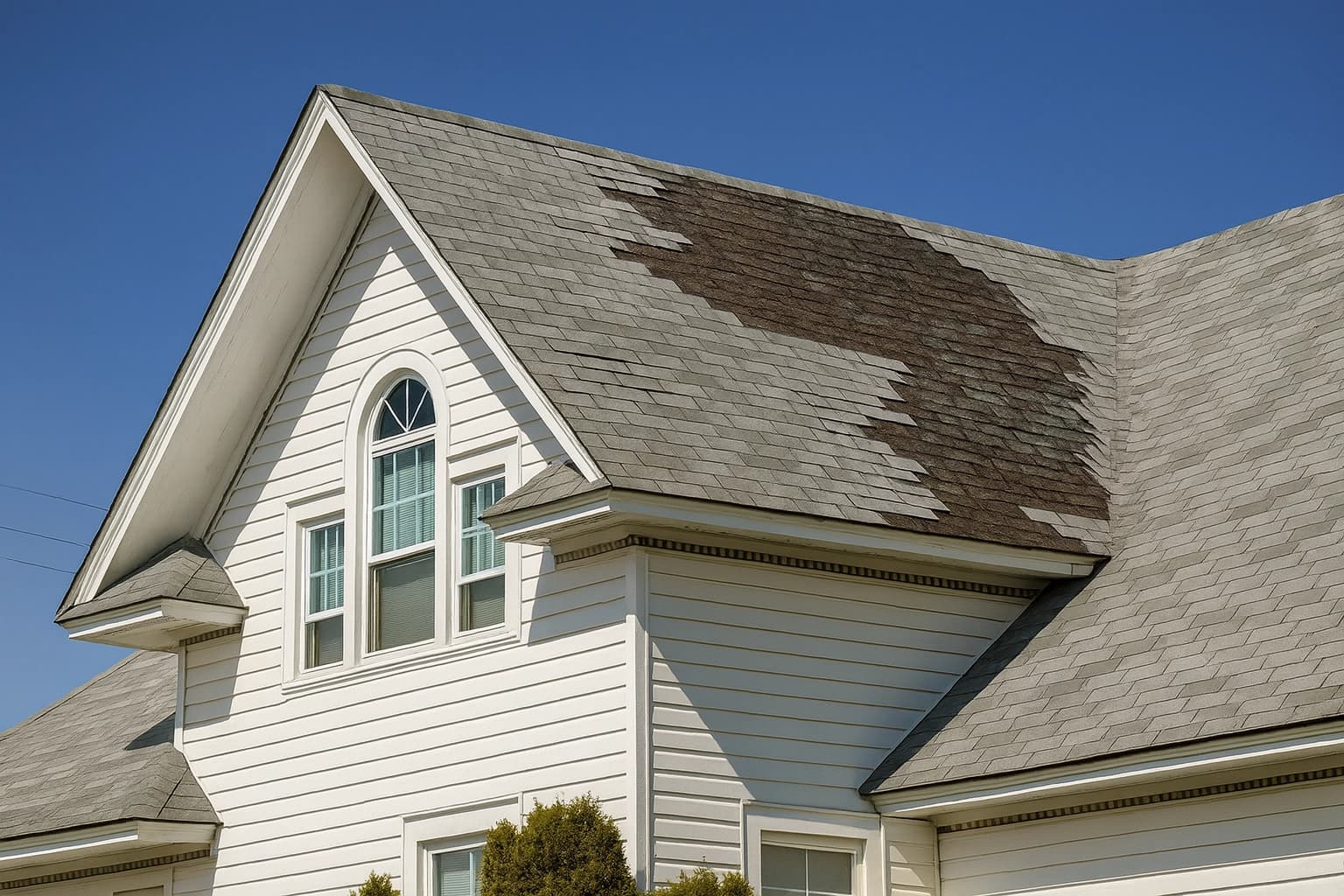
- Shingle condition. Granule loss, curling, cracking, creased tabs from wind, and hail bruising, which is soft to the touch and often invisible from the ground.
- The ridge and hips. These take the most wind exposure and frequently fail first.
- Valleys. Where two roof planes meet, water volume concentrates. Valleys wear faster than open field.
- Decking feel. An experienced inspector notices soft or spongy spots underfoot, which indicate rot in the sheathing below.
Some inspections now use drones, particularly on steep or fragile roofs. That is legitimate for surface assessment, though it cannot replace the feel of the decking or a real look at the flashing details.
3. Flashing and penetrations (10 minutes)
This is where most leaks actually originate, and where a thorough inspection separates itself from a quick one.
Every place something comes through the roof is a potential failure point: chimneys, vent pipes, exhaust fans, skylights, and any wall-to-roof junction. The inspector is checking that metal flashing is seated and sealed, that rubber pipe boots have not cracked from UV exposure, and that sealant has not dried out and pulled away.
4. The attic (10 minutes)
An inspection that skips the attic is not a complete inspection, and plenty of them do skip it.
From inside, the inspector is looking for daylight visible through the deck, water staining on rafters or sheathing even if currently dry, wet or compressed insulation, mold, and the condition of your ventilation. Attic ventilation is the single most common contributor to premature roof failure in Indiana, and it can only be assessed from inside.
5. The written summary
You should leave with photographs of anything they found, a clear statement of the roof's overall condition and rough remaining life, a specific recommendation, and if work is recommended, an itemized scope.
You should not be asked to sign anything to receive this.
What They Are Actually Looking For
Different findings point in different directions:
| What They Find | What It Usually Means |
|---|---|
| Uniform granule loss, curling across all slopes | Age related wear, replacement conversation |
| Creased or missing shingles on one slope | Wind event, possibly a repair |
| Random bruising, granule divots | Hail, worth documenting carefully |
| Cracked pipe boots, lifted flashing | Targeted repair, often inexpensive |
| Soft decking, attic staining | Active or past leak, needs opening up |
| Hot attic, blocked soffit vents | Ventilation problem shortening roof life |
The distinction between age-related wear and sudden damage matters more than most homeowners realize, because it determines whether this is a maintenance expense or something else entirely. Our guide on roof repair versus replacement covers where that line falls, and the warning signs article covers what you can spot yourself beforehand.
How to Spot a Bad Inspection
Storm season brings crews into the area who are not local and will not be here next year. Warning signs:
They never get on the roof. A driveway assessment is not an inspection.
They found damage suspiciously fast. Real hail damage takes deliberate looking. A two minute diagnosis is a script.
They will not leave photos or a written report. If the evidence stays on their tablet, you cannot get a second opinion, which may be the point.
They pressure you to sign immediately. Legitimate contractors expect you to get other quotes. Urgency is a sales technique.
They offer to cover your deductible. This is insurance fraud in Indiana, and it puts you at risk, not just them.
They knocked on your door unprompted after a storm. Not automatically disqualifying, but it warrants extra scrutiny of everything above.
No local address, no verifiable local references. Ask where their office is. Ask for addresses of jobs they have done nearby.
How Often Should You Have One Done?
Once a year is reasonable for a roof past its first decade, ideally in fall before winter. Beyond that, get one after any significant wind or hail event, before buying a house, and any time you see an interior water stain.
If your roof is newer than ten years and has not seen a major storm, you can stretch this. Our breakdown of how long roofs last in Indiana covers what to expect by material.
Common Questions
How long does a roof inspection take?
Between 45 minutes and an hour for a typical single family home, longer for complex roof lines, multiple stories, or steep pitches.
Do I need to be home?
You do not need to be present for the roof portion, but it is worth being there for the walkthrough at the end. Seeing the photos while someone explains them is far more useful than reading a report later.
Will an inspection damage my roof?
Walking a roof properly does not damage it. That said, very old or brittle shingles can be fragile, and on those a good contractor will minimize foot traffic or use a drone.
Is a free inspection really free?
From a reputable local contractor, yes. There should be no charge and no obligation. What you are giving up is your time and a sales conversation at the end.
What if I disagree with what they found?
Get a second inspection. Two independent assessments of the same roof, both with photos, will usually make the answer obvious. Any contractor confident in their assessment will expect this.
HomeAid Exteriors has served Fort Wayne and northeast Indiana with over a decade of experience. Our inspections are free, documented, and come with no obligation.
Schedule a Free Roof Inspection
A full assessment of shingles, flashing, gutters, and attic ventilation, with photos and a written summary you keep. Call (260) 385-6968.
Fort Wayne Roofing & Roof Replacement
Architectural shingles, metal, and flat roofing installed by a local crew, backed by a 15-year workmanship warranty.