Roof Repair vs. Replacement: How to Know Which You Need
It's the question we hear on almost every inspection: "Can you just fix it, or do I need a whole new roof?" It's a fair question — the difference between a repair and a replacement is often the difference between a few hundred dollars and ten thousand.
The honest answer is that it depends on three things: how old your roof is, how widespread the damage is, and what's happening underneath the shingles. Below is exactly how we think through it on a Fort Wayne roof, so you can walk into your next inspection knowing what to ask.
The Quick Answer: Three Questions
Before we get into specifics, here's the framework we use. If you can answer these three questions, you're 90% of the way to knowing which path you're on.
- How old is the roof? Asphalt shingle roofs in Indiana last 18–25 years. The closer you are to that window, the more a "repair" is just delaying the inevitable.
- Is the damage in one spot, or spread out? A single wind-damaged section is a repair. Damage showing up on the north slope, the south slope, and around the chimney all at once points to a roof that's failing as a whole.
- Is the problem the shingles, or the deck underneath? Surface damage is fixable. Once moisture has rotted the decking or the structure is sagging, you're past the point of patching.
When a Roof Repair Is the Right Call
Repairs get a bad reputation because some contractors push replacement on every job. But plenty of roofs only need a repair — and recommending one you don't need would cost you thousands for no reason.
A repair is usually the right move when:
- The roof is under 15 years old. A younger roof with isolated damage has plenty of life left. Replacing it would mean throwing away years of value.
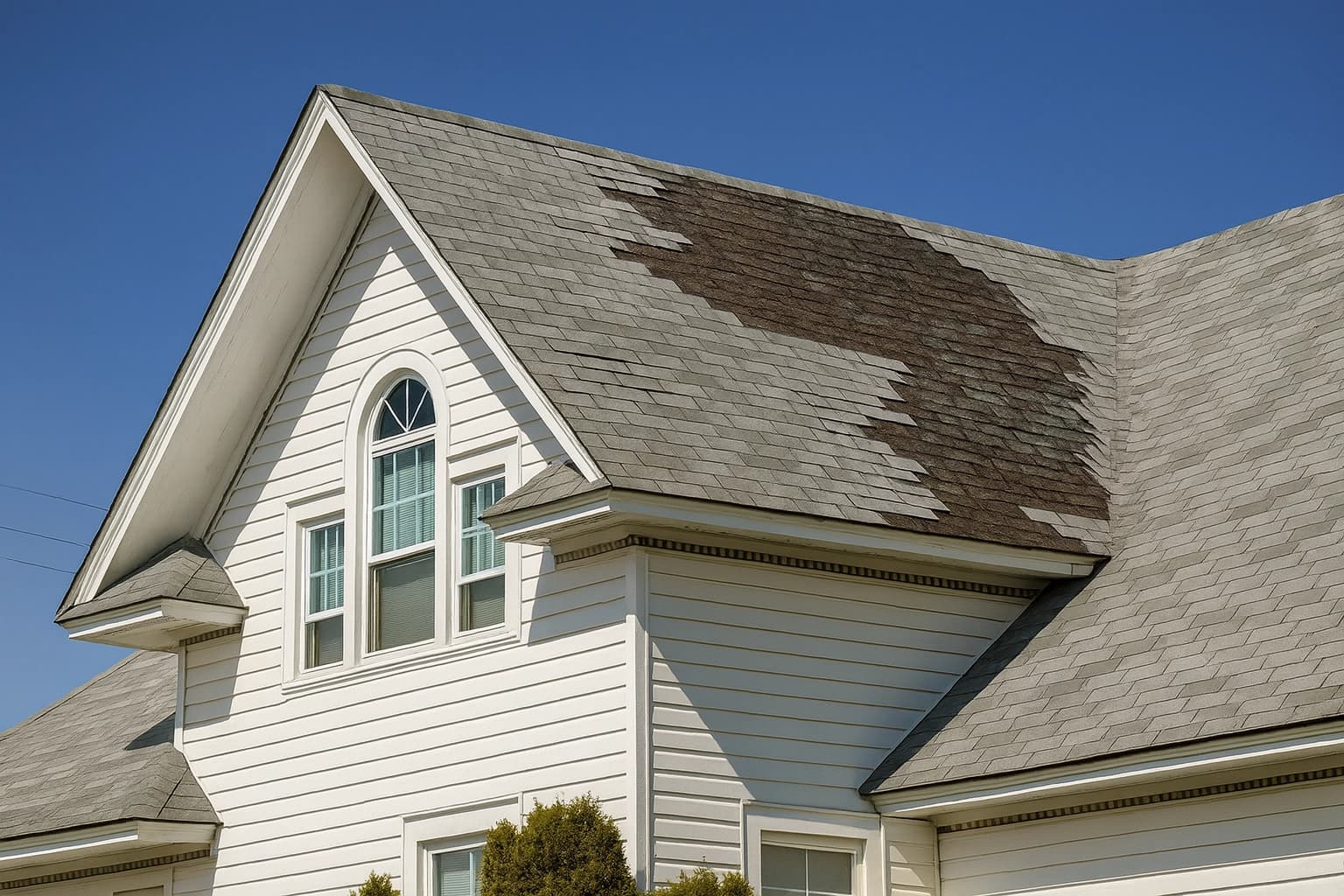
- The damage is confined to one area. A few shingles blown off in a storm, a cracked vent boot, flashing that's pulled away from the chimney — these are localized problems with localized fixes.
- The decking is still solid. If the plywood or OSB under the shingles is dry and sound, the structure is fine and you're only dealing with the surface.
- It's a single leak with a clear source. Many leaks trace back to one failed penetration — a pipe boot, a skylight seal, a section of step flashing — not the field of the roof.
Common repairs we do in Fort Wayne
- Replacing shingles blown off in a windstorm
- Resealing or replacing flashing around chimneys, walls, and skylights
- Swapping out cracked or dried-out rubber pipe boots (one of the most common leak sources we see)
- Patching small sections of storm or impact damage
- Fixing ridge cap and ridge vent damage
If your situation sounds like one of these, a targeted roof repair is likely all you need. Not sure what's causing a leak? That's exactly what a free inspection is for — sometimes a $300 boot replacement solves what looked like a major problem from inside the house.
Fort Wayne Roof Repair
Leaks, storm damage, flashing, and boot failures. We find the source, fix it right, and tell you honestly if a repair will hold.
When You Need a Full Replacement
Replacement becomes the right answer when a repair would just be a band-aid on a roof that's failing across the board. Here's when we recommend replacing rather than patching:
- The roof is 18+ years old and showing wear. Once shingles are past their service life, repairing one section doesn't help the rest — the whole roof is on borrowed time. (We break down how long each material lasts in our guide on roofing in Fort Wayne.)
- Damage is spread across multiple slopes. When you're seeing curling, missing shingles, or bald spots in several areas, the asphalt is worn out everywhere, not just where it's visible.
- You've patched the same area more than once. If a section keeps leaking after two or three repairs, the repair isn't the answer.
- The decking is rotted or the roof is sagging. This is structural. No amount of new shingles fixes a deck that's been soaking up water. A sagging roofline needs to be opened up and rebuilt.
- Granules are washing out everywhere. Widespread granule loss — gritty buildup in every gutter and downspout — means the protective surface is gone and UV is eating the shingles fast.
For most Fort Wayne homeowners, a full replacement runs $10,000–$18,000 for architectural shingles. We walk through the full breakdown in our roof replacement cost guide.
If you're seeing several of these signs together, it's worth reading our full list of warning signs you need a new roof — especially the granule-loss section, which is the one most homeowners miss.
The 25–30% Rule (How the Money Actually Works)
Here's the rule of thumb contractors use, and it's a good one for homeowners too:
When the cost of repairs reaches 25–30% of the cost of a full replacement, replacement is usually the better investment.
The logic is simple. If your roof needs $4,000 in repairs and a new roof costs $14,000, that repair buys you maybe a few years — and you'll still need the $14,000 roof soon, except now you've spent $18,000 total. Whereas if a $600 repair gets a 10-year-old roof through another decade, that's money well spent.
The math changes with the age of the roof:
| Roof Age | Isolated Damage | Widespread Damage |
|---|---|---|
| Under 10 years | Repair | Repair (and investigate why) |
| 10–15 years | Repair | Repair, plan ahead |
| 15–20 years | Repair if minor | Lean replacement |
| 20+ years | Repair only to buy time | Replace |
A roof that's already 22 years old isn't worth a $3,000 repair — you're investing in something that's at the end of its life either way. A 9-year-old roof with a leak almost always deserves the repair.
Don't Forget: Insurance Changes the Equation
If your damage came from a storm — wind, hail, or a fallen branch — the repair-vs-replace decision may not even be yours to make alone. Your insurance company will weigh in, and the outcome often favors replacement.
When an adjuster determines that storm damage is widespread enough that a repair won't restore the roof to its prior condition (or that matching shingles are no longer available), they'll frequently approve a full replacement. In that case your out-of-pocket cost may be just your deductible.
A few things to know:
- Storm damage is typically covered. Wear-and-tear is not. Insurance pays for sudden damage, not age.
- There's a deadline. Most policies require you to file within 12 months of the damage event.
- Documentation matters. Photos of the damage — ideally taken by a contractor during inspection — make a stronger claim.
We help homeowners through this all the time. Our guide on filing a roofing insurance claim walks through the process, and we can meet your adjuster on the roof to make sure nothing gets missed.
How We Make the Call During an Inspection
When we come out, we're not guessing. Here's how we determine repair vs. replacement on your specific roof:
- We assess the whole roof, not just the problem spot. A leak in one corner can be a symptom of a roof that's failing everywhere — or it can be one bad boot. We check every slope before we recommend anything.
- We check the decking. Soft spots, sagging, and attic moisture tell us whether the structure underneath is sound.
- We factor in age and remaining life. A repair on a roof with two years left is a different decision than a repair on a roof with twelve.
- We photograph everything. You see what we see, and you get documentation for insurance if it applies.
- We give you both numbers when it's a close call. If you're genuinely on the line, we'll quote the repair and the replacement so you can decide with real figures in front of you.
If a contractor tells you that you need a full replacement without getting on the roof and checking the decking, get a second opinion. And if they tell you a 23-year-old roof with damage on three slopes just needs a quick patch, be skeptical of that too.
Common Questions
Can I repair just one section of a roof?
Yes — sectional repairs are common and completely legitimate, especially for storm damage or a single failed area. The main caveat is shingle matching: on an older roof, new shingles may not match the weathered ones, which is cosmetic but worth knowing.
Will a repair void my roof warranty?
A repair done by a qualified contractor generally won't void anything. Problems usually come from DIY fixes or improper work. If your roof is under a manufacturer or workmanship warranty, mention it — the repair should be done in a way that keeps that coverage intact.
How long do roof repairs last?
A properly done repair on a sound roof can last as long as the surrounding roof does. The repair itself isn't the weak point — the age of the rest of the roof is. That's why we always factor remaining roof life into the recommendation.
Is it ever worth replacing a roof that only needs a repair?
Occasionally. If your roof is 17–18 years old, you're planning to sell soon, or you want to bundle the work with a siding or gutter project, replacing a little early can make sense. But that's your call — we'll never push it.
What if I can't afford a replacement right now?
Financing is available, and we can help you find a payment plan that works. If you have an active leak, we can often do a targeted repair to buy you time until you're ready for the full project. Talk to us — we'll find a path forward.
Get a Straight Answer on Your Roof
The repair-vs-replacement decision shouldn't be a sales pitch — it should be based on what your roof actually needs. Sometimes that's a $400 fix. Sometimes it's a full replacement your insurance will largely cover. Often it's "you've got a few good years left, let's check it again next spring."
At HomeAid Exteriors, we've been repairing and replacing roofs across Fort Wayne and northeast Indiana since 2013. We'll inspect the whole roof, check the decking, factor in its age, and give you an honest recommendation — with real numbers for both options when it's a close call.
The inspection is free. Call (260) 385-6968 or request your free inspection online.
Schedule Your Free Roof Inspection
We'll tell you honestly whether you need a repair, a replacement, or just a recheck next year — no pressure, no upsell.