
How Often Should You Clean Your Gutters in Indiana?
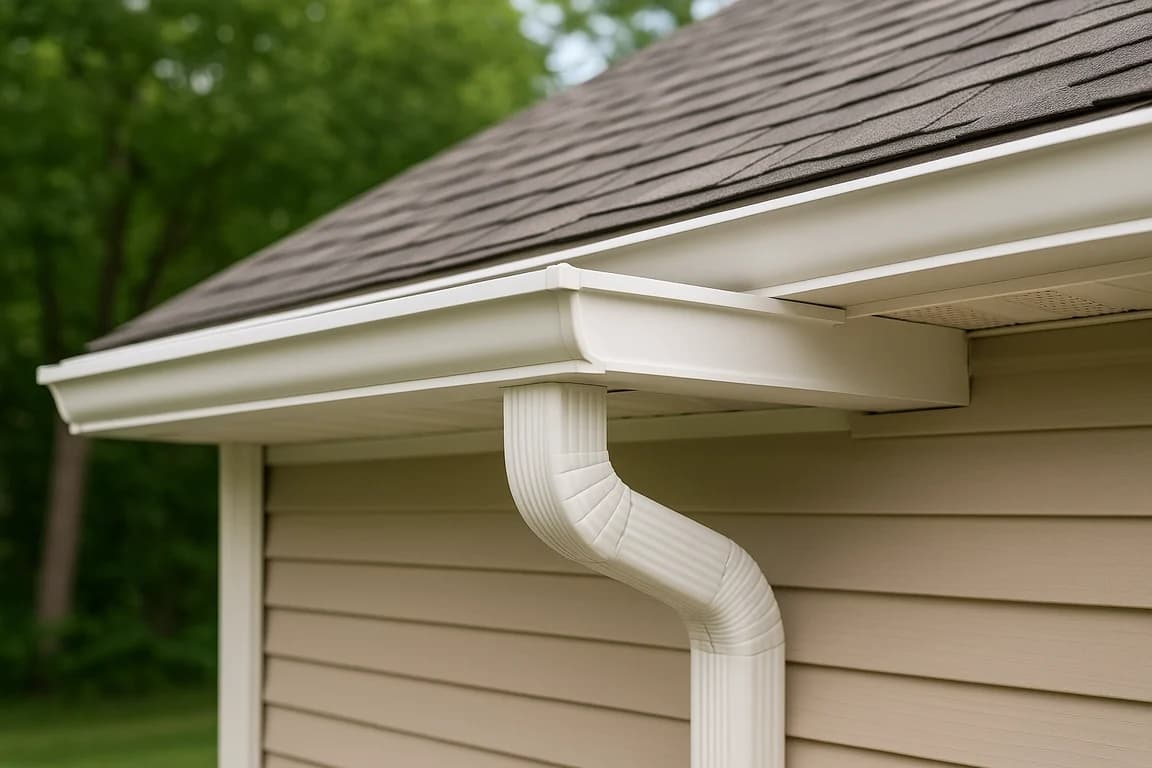
Twice a year is the standard answer, and for most Indiana homes it is the right one: once in late spring after the seeds and blossoms drop, and once in mid to late fall after the leaves come down.
But that number assumes an average lot. Tree cover changes it substantially:
| Your Situation | Cleanings Per Year |
|---|---|
| Few or no trees nearby | 1, in late fall |
| Average tree cover | 2, late spring and mid fall |
| Heavy tree cover, especially oaks or maples | 3 to 4 |
| Pine trees near the house | 4, needles fall year round |
| Gutter guards installed | 1 inspection, occasional clearing |
Why Twice a Year Is the Baseline
Indiana gutters fill up in two distinct waves, and each one needs its own cleaning.
Late spring brings maple seeds, oak catkins, blossom debris, and the shingle grit that washes down after winter. Homeowners tend to skip this one because spring debris is less visible than fall leaves, but it packs down into a dense mat at the bottom of the gutter that blocks drainage all summer.
Mid to late fall is the important one. Leaves come down over a period of weeks in northeast Indiana, not all at once, which is why a single October cleaning often is not enough. Clear the gutters in early October and the trees will refill them by early November.
If you only clean once a year, make it late fall, and make it late enough that most of the leaves are actually down.
When Two Cleanings Are Not Enough
Some situations genuinely need more attention:
Oaks and maples directly over the house. These are the worst offenders in our area. They drop heavily, the leaves are large enough to block downspout openings, and they hold water once they settle.
Pine or spruce nearby. Needles shed year round and they are small enough to slip past most basic screens, then knit together into a mat that water cannot pass through.
A low-pitch roof. Debris that would slide off a steep roof sits on a shallow one and gradually washes into the gutters.
Recent roof work. After a replacement, expect loose granules in the gutters for the first season. This is normal, but it settles into a heavy sludge at the low end.
Neighboring trees. Your neighbor's oak does not care about the property line. Wind carries leaves surprisingly far.
The Warning Signs You Are Overdue
You do not need a ladder to spot most of these:
- Water spilling over the front edge during rain. The clearest sign. A working gutter should carry water to the downspout, not over the lip.
- Plants growing in the gutter. Seedlings mean there is enough packed organic matter up there to hold soil and moisture. This is well past due.
- Sagging between hangers. Wet debris is heavy. A gutter full of soaked leaves can hold considerable weight, and it will pull away from the fascia.
- Streaks or stains on the siding below the gutter. Overflow running down the wall leaves marks.
- Water pooling near the foundation after rain. The gutter is not moving water away from the house.
- Birds or wasps around the gutter line. Both nest in debris-filled gutters.
What Happens If You Skip It
Gutter neglect rarely causes an obvious problem right away. It causes several slow ones.
Water that overflows lands at the foundation instead of four feet away, which over time means basement seepage and soil erosion around the footings. Water trapped in the gutter sits against the fascia board and rots it from behind, taking the soffit and fascia with it. The weight of packed wet debris pulls hangers loose and eventually deforms the gutter itself.
Winter is where it gets expensive. A gutter packed with debris holds water, that water freezes, and you get a solid ice ledge at the eave. That ledge contributes directly to ice dams, where meltwater backs up under the shingles and into the roof deck. The short version is that a $150 cleaning prevents a repair that runs into the thousands.
Cleaning Them Yourself vs Hiring It Out
Single-story homes with a stable ladder setup are a reasonable DIY job. Scoop the debris by hand into a bucket, then flush each downspout with a hose to confirm it drains.
Two-story work is a different proposition. Falls from ladders are among the most common serious home maintenance injuries, and gutter work puts you at full extension, reaching sideways, on ground that is often soft from the rain that prompted the job. If you are on a second story, hire it.
Whoever does it, the job is not finished until the downspouts have been flushed. A spotless gutter feeding a blocked downspout is still a blocked system, and downspout clogs are the ones that cause overflow at the corners.
When Guards Make Sense
If you are cleaning three or four times a year, or paying someone to, guards start to pay for themselves fairly quickly. They do not eliminate maintenance, and any installer who tells you otherwise is overselling. What they do is convert frequent full cleanings into an annual inspection and occasional clearing.
Quality varies enormously, and the cheap snap-in screens sold at big box stores are usually worse than nothing, because fine debris gets through and then cannot be reached.
When Cleaning Is No Longer the Answer
At some point a gutter system is past maintenance. If yours is sagging between hangers, leaking at the seams, separated from the fascia, or visibly deformed, cleaning it will not restore function.
Sectional gutters in particular tend to fail at the joints after enough freeze-thaw cycles, which is a big part of why we install seamless systems instead. Our gutter services page covers what replacement involves, and the cost breakdown walks through pricing.
Common Questions
What is the best month to clean gutters in Fort Wayne?
Late October or early November for the fall cleaning, once the majority of leaves are down but before the first hard freeze. For the spring cleaning, late May after the seeds and blossoms have finished dropping.
Can I just spray the gutters out with a hose?
Not effectively. Water pushes light debris toward the downspout, where it packs into a plug. Wet leaves need to be removed by hand or with a scoop. Use the hose afterward to flush and confirm flow.
How much does professional gutter cleaning cost?
Most single-story homes in the Fort Wayne area fall in the $100 to $200 range, with two-story homes higher depending on size and access. Prices rise in peak fall season, so booking early helps.
Do gutter guards mean I never have to clean again?
No. Good guards dramatically reduce how often you need to clear them, but they still need periodic inspection, and fine debris accumulates on top of the guard itself. Treat "maintenance free" as marketing language.
My gutters overflow even though they are clean. Why?
Usually one of three things: a clogged downspout, gutters that are undersized for the roof area draining into them, or gutters pitched incorrectly so water pools instead of running to the outlet. All three are worth having looked at, because none will resolve on their own.
HomeAid Exteriors has served Fort Wayne and northeast Indiana with over a decade of experience in roofing, siding, and gutters. Financing is available.
Seamless Gutters & Guards in Fort Wayne
Seamless gutter systems built to handle Indiana's freeze-thaw cycles, installed by a local crew. Free estimates across northeast Indiana.
Get a Free Gutter Assessment
Not sure whether yours need cleaning, repair, or replacement? We'll take a look and give you an honest answer. Call (260) 385-6968.