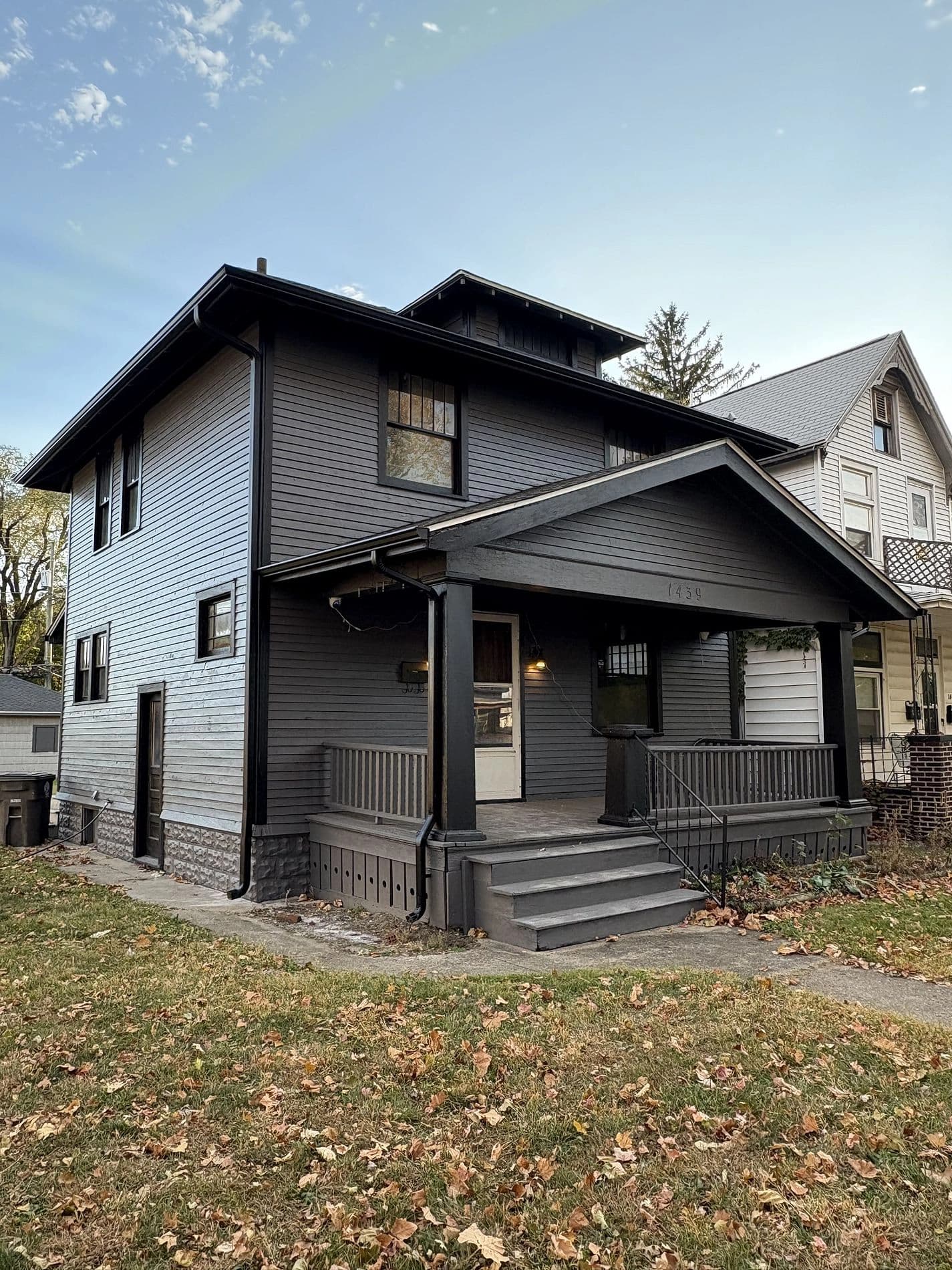
Seamless vs. Sectional Gutters: Why Fort Wayne Contractors Recommend Seamless
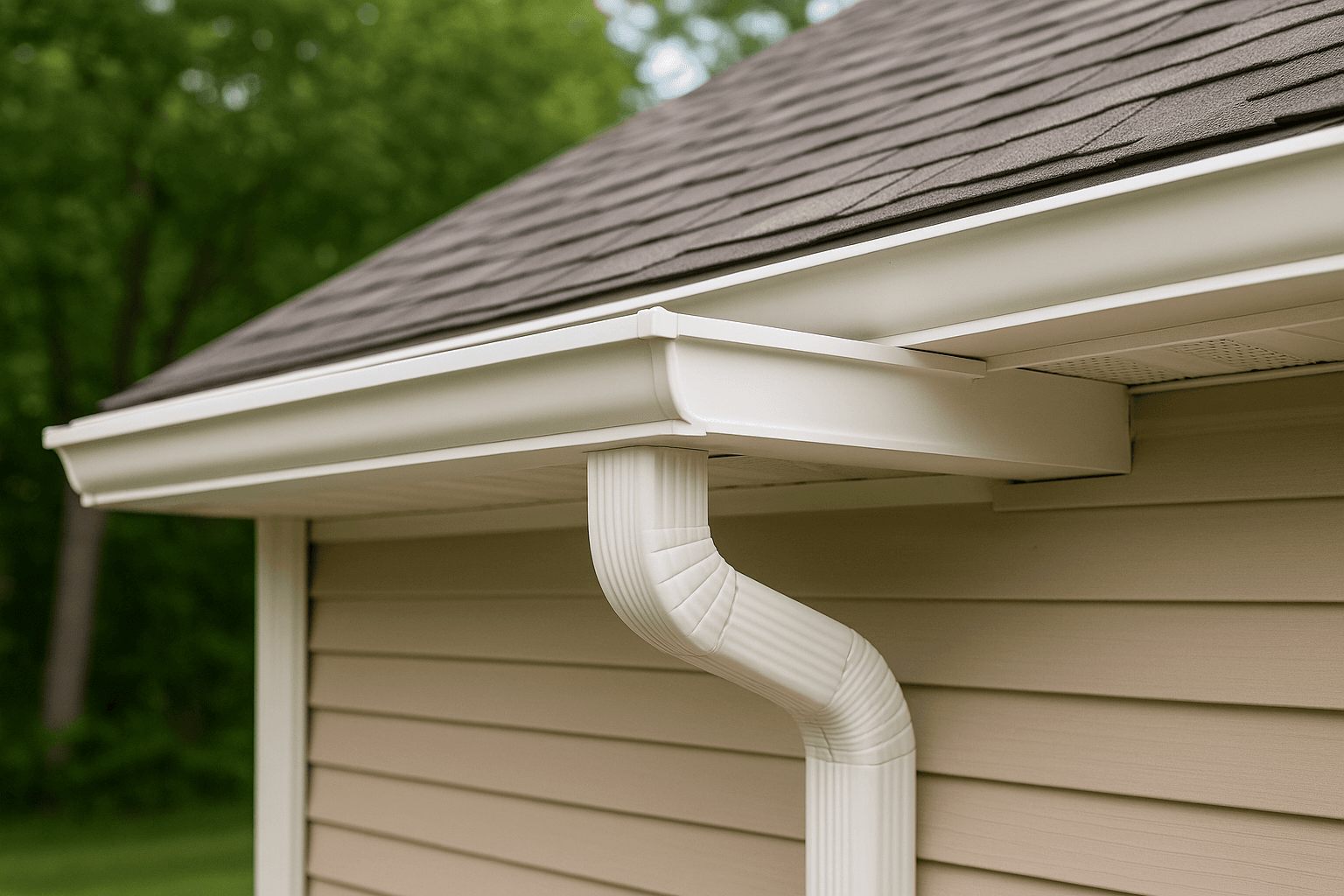
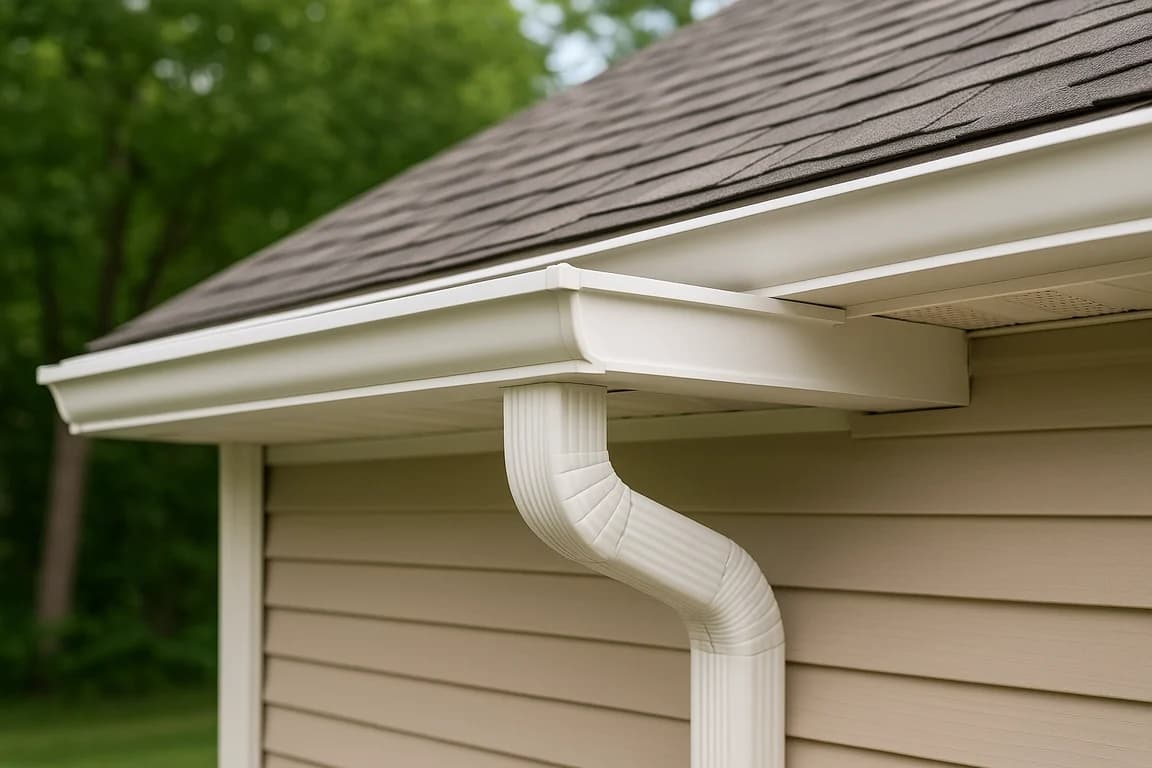
If you've ever walked the gutter aisle at a big-box store and wondered why those snap-together aluminum sections cost so little compared to a professional install, the answer is in the word "seamless." Sectional gutters are cheaper because they're sold in pre-cut 10-foot pieces you bolt together. Seamless gutters are formed on-site, as one continuous run, from a single coil of aluminum. That one difference — joints vs. no joints — drives almost every other comparison between the two.
Here's the full breakdown, why nearly every reputable contractor in Fort Wayne installs seamless, and the rare cases where sectional still makes sense.
The Quick Comparison
| Feature | Sectional Gutters | Seamless Gutters |
|---|---|---|
| How they're made | Pre-cut 10-foot sections joined with connectors | Formed on-site from a continuous aluminum coil |
| Joints per typical home | 15–25+ seams | 4–8 corner joints only |
| Leak risk | High — every joint is a future leak | Very low — no joints along straight runs |
| Material options | Vinyl, aluminum, steel | Aluminum (most common), copper, steel |
| Cost (installed, 150 ft home) | $600 – $1,600 | $1,200 – $3,000 |
| DIY-friendly? | Yes (vinyl especially) | No — requires forming machine |
| Lifespan in Indiana | 5–15 years | 20–30 years |
| Appearance | Visible joints, more utilitarian | Clean continuous line, more polished |
| Color permanence | Often painted (peels over time) | Factory baked-on color (won't peel) |
What Are Sectional Gutters?
Sectional gutters are exactly what they sound like — gutters sold in standard sections (usually 10 feet long) that you cut to length and join together with connectors, brackets, and sealant.
You'll find them at every home improvement store. They come in vinyl (the cheapest), aluminum, and sometimes steel. Most DIY gutter installations use sectional vinyl because it's lightweight, easy to cut, and snaps together with relatively little expertise.
How they go up:
- Sections are measured, cut, and assembled on the ground
- Joints are sealed with silicone or rubber gaskets
- Hangers are attached to the fascia
- The assembled gutter is lifted up and secured
It's a doable weekend project for a homeowner with a tall ladder, decent measurement skills, and a tolerance for working at height.
Where Sectional Gutters Fall Short
The seams are the whole problem. Every joint is a place where:
- Sealant breaks down. Silicone caulk fails within 3–7 years in Indiana's freeze-thaw climate. Once it fails, water dripping out of joints is constant.
- Debris catches. Joints create slight ledges inside the gutter that snag leaves and debris, causing localized clogs.
- Sections shift. Thermal expansion and contraction work joints loose over time. You'll see joints separate, sag, or come apart entirely.
- Rust and corrosion start. Even aluminum sections will corrode at joints where dissimilar metals meet (screws, connectors) and moisture sits.
For most homes, sectional gutters need re-sealing every few years and outright replacement within 10–15 years. Vinyl ones rarely last that long in Indiana — the freeze-thaw cycles crack them and the joints separate within 5–8 years.
What Are Seamless Gutters?
Seamless gutters are formed on-site by a portable gutter machine that takes a flat coil of aluminum (or steel, or copper) and rolls it into a finished K-style or half-round gutter profile in one continuous piece. The installer measures each run of your roof, feeds that exact length through the machine, and lifts the finished gutter up to the fascia.
How they go up:
- The roofline is measured to the inch
- Each straight run is formed on the truck in a single continuous piece
- End caps, outlets, and miter cuts are added by hand
- The full piece is lifted up and secured with hidden hangers spaced for the load
- Corners and downspouts are connected and sealed
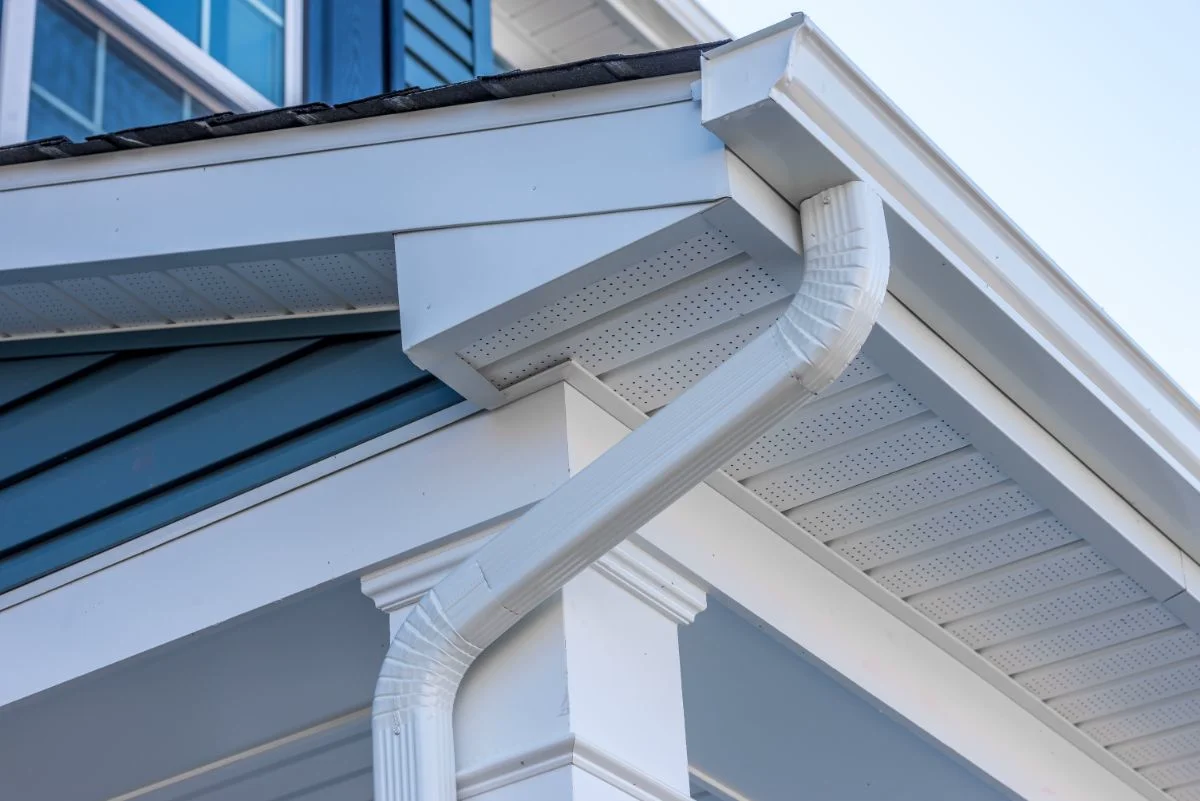
The only joints in a seamless system are at the corners of your house (where two straight runs meet at a 90° angle) and at downspout outlets. Everything in between is one piece.
Why That Matters in Practice
Take a typical Fort Wayne ranch with 150 feet of gutter and 4 corners:
- Sectional system: ~15 joints along straight runs + 4 corner joints = 19+ failure points
- Seamless system: 0 joints along straight runs + 4 corner joints = 4 failure points
That's nearly 80% fewer places for leaks to start. Compounded over 20+ years of freeze-thaw cycles, that's the difference between gutters that quietly do their job and gutters that drip on your foundation every storm.
Cost: What You're Really Paying For
We covered detailed pricing in our gutter replacement cost guide for Fort Wayne, but here's the short version:
| Project | Sectional (Materials Only DIY) | Sectional (Installed) | Seamless (Installed) |
|---|---|---|---|
| 150 linear feet, simple home | $300 – $600 | $700 – $1,400 | $1,200 – $2,400 |
| 200 linear feet, 2-story | $500 – $900 | $1,200 – $2,000 | $2,000 – $3,500 |
| Complex multi-roofline home | Not recommended DIY | $1,800 – $2,800 | $2,800 – $4,500 |
The price gap between professionally installed sectional and seamless is usually $500–$1,200 on a typical home. That's where the long-term math kicks in:
- Sectional system: $1,200 installed, lasts 10–12 years → $100/year amortized
- Seamless system: $2,000 installed, lasts 25 years → $80/year amortized
And that's before factoring in what leaks cost — fascia rot, soffit replacement, foundation moisture, and re-sealing labor every 3–5 years on the sectional system.
How They Perform in Fort Wayne's Weather
Northeast Indiana is rough on gutters. Three seasons in particular put gutters to the test:
Spring Downpours
Fort Wayne sees regular spring thunderstorms with 1–2 inches of rain per hour. During those bursts, gutter capacity is everything. Sectional gutters with debris-collecting joints overflow more easily — and the overflow tends to happen right at a joint, where it dumps directly onto your siding instead of flowing along the gutter to a downspout.
Seamless gutters handle peak loads better because the inside surface is smooth, water moves through faster, and there are no internal obstructions.
Fall Leaves
Every joint in a sectional gutter is a tiny ledge where leaves catch. We've pulled apart 8-year-old sectional gutters where every single joint had a leaf dam built up behind it, even though the rest of the gutter looked clean.
Seamless gutters have no internal joints to catch debris. Leaves either flow to the downspout or sit on the smooth bottom of the gutter, where they're much easier to clean out (or where gutter guards keep them out entirely).
Winter Ice
This is where sectional gutters really suffer. When water freezes in a gutter, it expands. In a sectional system, that expansion concentrates at the joints — pushing sealant out, separating sections, and warping connectors. By spring, you've got leaks at multiple joints that weren't there in fall.
Seamless gutters expand more uniformly along their full length. The aluminum flexes, but there's no joint to push apart. Add in proper installation (correct slope to downspouts, adequate hanger spacing) and seamless gutters handle Indiana winters far better.
Are There Cases Where Sectional Makes Sense?
Yes — a few:
- Detached sheds, small outbuildings, or short runs under 30 feet. Not worth a contractor visit for a forming machine; sectional from a big-box store is fine.
- Temporary fixes. If your gutters failed mid-winter and you need something up immediately while you plan a proper seamless install for spring, a sectional patch can buy you time.
- True DIY budgets. If $700 vs. $1,500 is the difference between gutters and no gutters at all, sectional is better than nothing. Plan to upgrade in 5–7 years.
- Historic or specialty projects. Some historic homes use half-round or ogee profiles that may need to be sourced in pre-formed sections. Most modern installers can still form these seamlessly, but specialty profiles are an exception.
For 95% of Fort Wayne homes — single-family residences with normal rooflines — seamless is the right call.
What About Material? Aluminum, Steel, or Copper?
Both seamless and sectional gutters come in different materials. Here's the short version of how they stack up:
- Aluminum (most common): Rust-proof, lightweight, comes in dozens of factory-baked colors. The default choice for residential gutters in Indiana.
- Steel (galvanized or stainless): Stronger and more impact-resistant than aluminum. Heavier, more expensive, and galvanized steel can rust over time. Sometimes used in areas with heavy ice loads or where falling branches are a concern.
- Copper: Looks incredible and lasts 50+ years. Costs 3–4x more than aluminum. Mostly used on high-end homes where curb appeal is part of the budget.
- Vinyl (sectional only): The budget option. Cracks in Indiana's freeze-thaw climate, joints separate, color fades fast. We almost never recommend it.
If you're going seamless, aluminum is the default — and it's what we install on the vast majority of our jobs.
Fort Wayne Seamless Gutter Installation
Heavy-gauge aluminum, formed on-site, installed by our own crew. Free estimates across Fort Wayne and northeast Indiana.
What the Installation Looks Like
Here's how a typical seamless gutter install goes with us:
- Free estimate. We measure the roofline, check the fascia condition, and give you a written quote with material and color options.
- Material delivered to the job site. Aluminum coils, downspouts, hangers, and outlets arrive with our crew.
- On-site forming. Our gutter machine sets up at the truck. Each run of your roof is measured, then formed in one continuous piece.
- Fascia inspection. Before new gutters go up, we check the fascia and soffit for rot. Damaged fascia gets replaced before installation — otherwise the new gutters will fail prematurely.
- Installation. Gutters are lifted up, hung with hidden hangers spaced for the load, sloped correctly to downspouts, and sealed at corners and outlets.
- Downspouts and extensions. Downspouts are installed with discharge extensions that move water at least 4–6 feet from the foundation.
- Cleanup. Old gutters and packaging hauled away, property cleaned.
Most homes are done in a single day. Larger or more complex projects can take two.
Common Questions
Can you install seamless gutters over my existing fascia?
In most cases, yes — assuming the fascia is in good shape. We always inspect the fascia behind your old gutters before installing new ones. If we find rot, soft spots, or water damage, we repair or replace the affected sections first. New gutters on bad fascia is a waste of money.
What size seamless gutter do I need?
Standard residential is 5-inch K-style with 2x3 or 3x4 downspouts. Homes with steep roofs, large roof areas, or heavy rainfall patterns may benefit from 6-inch K-style with 3x4 downspouts. We size each project to the roof — we'll recommend what your house actually needs.
How long does seamless gutter installation take?
Most single-family homes take 4–8 hours. Larger or more complex homes (multiple rooflines, lots of corners, fascia repairs needed) can take a full day or extend into a second day.
Will seamless gutters match my house color?
Aluminum seamless gutters come in 20+ factory-baked colors — white, almond, brown, black, bronze, charcoal, and many others. The color is baked into the aluminum at the mill, so it won't peel or chip like painted gutters. We bring samples to every estimate.
What about gutter guards?
Highly recommended, especially in Fort Wayne where mature trees drop leaves, needles, and seed pods every fall. Adding guards at installation is more cost-effective than retrofitting them later. We cover the different guard types in our gutter cost guide.
Can I replace just one run of gutter with seamless if the rest is sectional?
Technically yes, but we usually don't recommend mixing. The other sectional runs will continue to fail at the joints, and you'll be coming back for more replacements within a few years. Most of the time, when one run has failed, the others aren't far behind. Replacing the full system at once also looks better.
Do you warranty the installation?
Yes. Our seamless gutter installs come with a workmanship warranty, and the aluminum manufacturer warranty covers the material itself. Specifics depend on the project — we'll go through the warranty terms with you at the estimate.
Why It's Worth Doing Right
Gutters are one of those systems you only think about when they fail. But when they do fail, the secondary damage adds up quickly: rotted fascia, ruined siding, basement moisture, eroded landscaping, and foundation issues. The cost of fixing those problems makes the upfront premium for seamless gutters look small in retrospect.
For most Fort Wayne homes, seamless aluminum gutters are the smart middle ground — affordable enough to make sense on a normal budget, durable enough to outlast your roof, and reliable enough that you can forget about them for 20+ years.
At HomeAid Exteriors, we install seamless gutters across Fort Wayne and all of northeast Indiana. Every gutter is formed on-site from heavy-gauge aluminum, hung with hidden hangers, and backed by a real workmanship warranty.
The estimate is free. Call (260) 385-6968 or request your free estimate online. We'll measure, check your fascia, and give you a straight quote — no pressure.
Get a Free Seamless Gutter Estimate
On-site measurement, fascia inspection, and a written quote. We'll match your trim color and walk you through your options.