Why Clogged Gutters Destroy Your Foundation (And How to Prevent It)

A gutter system exists for exactly one reason: to move roof water away from your foundation. A 2,000 square foot roof sheds roughly 1,200 gallons of water in a single inch of rain. When the gutters are blocked, all of that lands in a narrow band right against your house.
That is the whole mechanism. Everything below is what happens next.
How Roof Water Becomes a Foundation Problem
Step one: the water lands in the wrong place
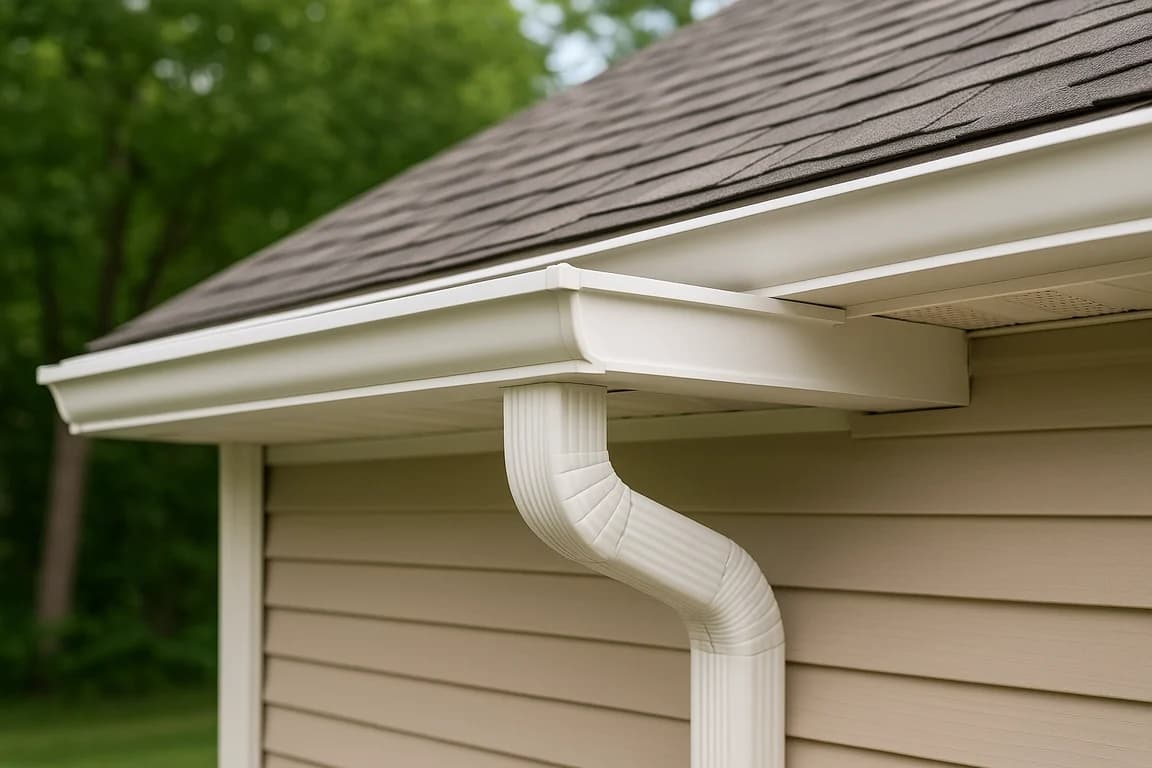
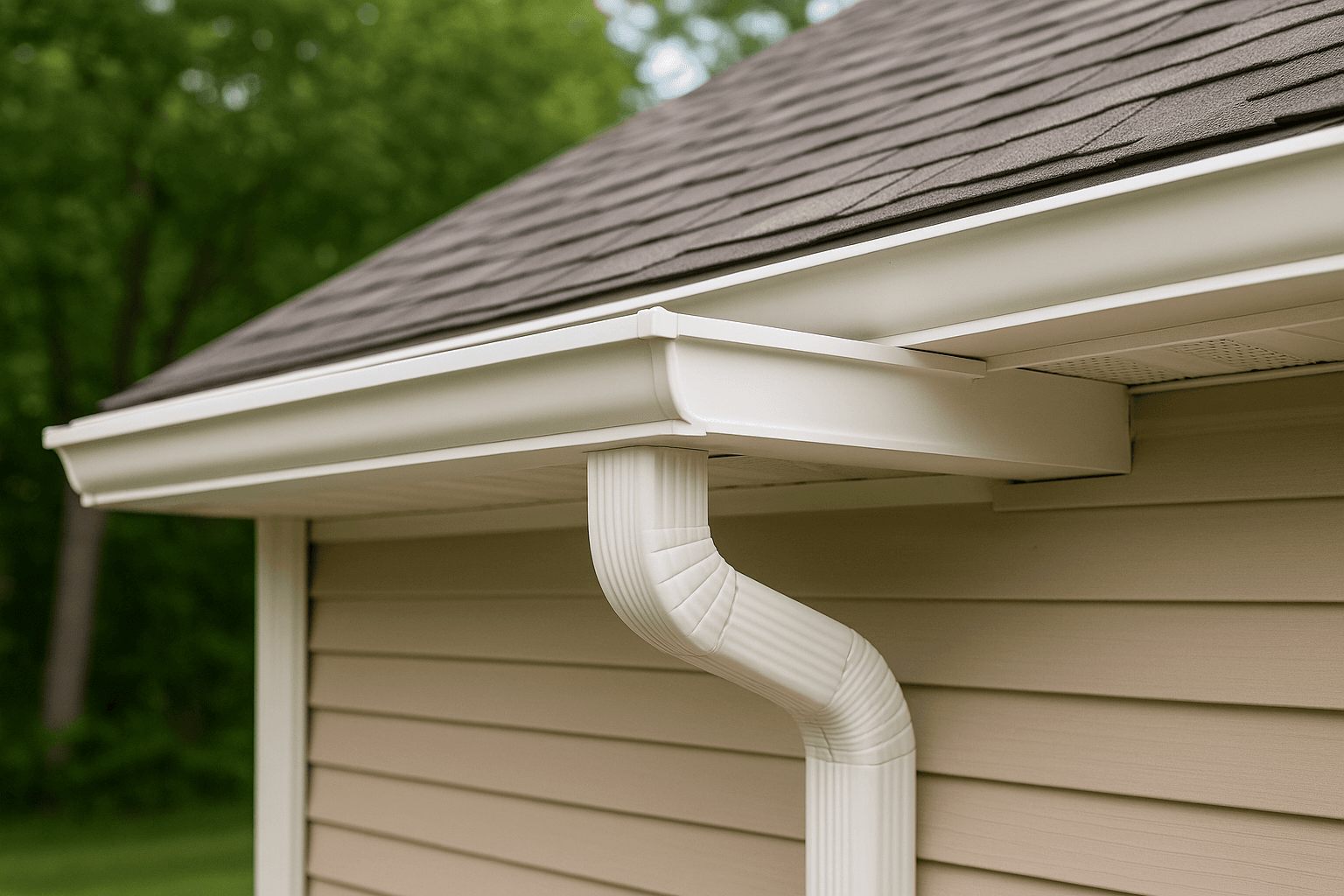
Working gutters and downspouts carry roof water several feet from the house. Blocked ones send it over the gutter edge in a concentrated sheet along the drip line, which is the strip of soil directly against the foundation wall.
Step two: the soil changes volume
Northeast Indiana sits on clay heavy soil, and clay is unusually expansive. It swells significantly when saturated and contracts when it dries out.
That swelling pushes laterally against the foundation wall. This is called hydrostatic pressure, and a saturated clay soil can exert a genuinely substantial force against basement walls. Then in a dry spell the clay shrinks and pulls away, leaving a void, and the wall settles slightly into it.
Repeat that cycle across seasons and years and you get cracking. Not from one event, but from the accumulation.
Step three: freeze-thaw accelerates everything
Fort Wayne averages around 35 freeze-thaw cycles a year. Saturated soil against a foundation freezes and expands, then thaws and contracts. Water that has already worked into a hairline crack freezes and widens it.
This is why the fall gutter cleaning matters so much more than the spring one. Going into winter with blocked gutters means the soil against your foundation enters freeze season already saturated.
Step four: the water finds its way in
Once there is a crack, water follows it. What starts as a damp basement wall becomes efflorescence, that white chalky mineral residue, then active seepage, then standing water after heavy rain.
The Warning Signs
Outside the house:
- Soil eroded or trenched along the drip line. Visible channels where overflow has been landing.
- Mulch or landscaping washed out below the gutter line.
- Pooling water against the foundation more than a few hours after rain stops.
- Overflow marks or staining on the siding.
- Downspouts discharging right at the foundation with no extension.
Inside:
- Damp or discolored patches on basement walls, especially low down.
- White powdery residue on concrete or block, which is mineral deposit left by water passing through.
- Horizontal cracks in a block wall, which indicate lateral soil pressure and are more serious than vertical ones.
- Stair step cracking following the mortar joints in block.
- Doors or windows sticking on the main floor, which can indicate differential settlement.
- A musty smell that persists after dehumidifying.
Horizontal cracking and sticking doors are worth a structural opinion, not just a gutter cleaning.
What This Costs
The asymmetry is the entire argument:
| Fix | Typical Range |
|---|---|
| Gutter cleaning | $100 to $200 |
| Downspout extensions | $10 to $50 each |
| Gutter repair or re-pitch | $150 to $500 |
| Full gutter replacement | $1,200 to $3,500 |
| Interior drain tile and sump | $5,000 to $15,000 |
| Foundation crack repair | $500 to $3,000 per crack |
| Structural foundation repair | $10,000 to $30,000+ |
Every figure in the bottom half is preventable by the figures in the top half. That is not a sales pitch, it is just the arithmetic of where the water goes.
Preventing It
Clean the gutters on a real schedule. Twice a year minimum for most Fort Wayne homes, more with heavy tree cover. Our guide on how often to clean gutters in Indiana covers what your specific situation calls for.
Extend the downspouts. This is the single highest value, lowest cost item on the list. Water needs to discharge at least four feet from the foundation, and further is better. Splash blocks drift out of position over time, so check them.
Check the grade. The ground should slope away from the house, roughly six inches of drop over the first ten feet. Soil settles over the years and grade that was correct when the house was built often is not now.
Fix the gutters that are failing. Sagging sections hold standing water, and separated seams dump water at the joint. Sectional systems fail at the joints far more than seamless ones do.
Consider guards if you are cleaning constantly. Whether they are worth it depends on your trees and your roof. Quality varies a lot, and cheap snap-in screens from a big box store are often worse than nothing.
Look at the fascia while you are at it. Water sitting in a gutter rots the board behind it, and once the fascia goes soft the hangers lose their grip and the whole run starts pulling away.
If the Damage Is Already Done
Fix the water source first. Repairing a foundation crack while the gutters still overflow onto it is spending money to buy time.
The right order is: clear and repair the gutters, extend the downspouts, correct the grade, then address the foundation. A foundation contractor who does not ask about your gutters is not diagnosing the problem, only treating the symptom.
For gutter damage that is beyond cleaning, our repair services cover re-hanging, re-pitching, and seam work, and our gutter services page covers full replacement.
Common Questions
Can clogged gutters really cause foundation damage that fast?
Not from one storm. This is a cumulative problem measured in seasons and years. But a single severe season with blocked gutters can absolutely produce basement seepage, and seepage is the early stage of the same process.
How far should downspouts discharge from the house?
Four feet is the common minimum, six to ten is better where the lot allows. On tight lots, consider underground drainage that carries water to a discharge point away from the structure.
My basement is only damp, not flooding. Is that a problem?
It is an early warning. Persistent dampness means water is reaching and passing through the wall. Addressing drainage now is far cheaper than after it becomes active seepage.
Do I need a foundation contractor or a gutter contractor?
Start with drainage. If clearing the gutters, extending the downspouts, and fixing the grade resolves the dampness, you are done. If cracks are horizontal, widening, or accompanied by doors sticking upstairs, bring in a structural specialist.
Does homeowners insurance cover foundation damage from gutters?
Generally no. Damage from long term water intrusion and deferred maintenance is typically excluded, which is precisely why prevention is the whole game here.
HomeAid Exteriors has served Fort Wayne and northeast Indiana with over a decade of experience in roofing, siding, and gutters. Financing is available.
Seamless Gutters in Fort Wayne
Properly pitched, properly sized seamless gutters that move water away from your foundation. Free estimates across northeast Indiana.
Get a Free Drainage Assessment
We'll check your gutters, downspouts, and discharge points and tell you whether water is reaching your foundation. Call (260) 385-6968.