Exterior Door Replacement Guide: Curb Appeal, Security, and Energy for Fort Wayne Homes
A front door is the one exterior upgrade that people notice from the street and feel every time they walk in. It is also one of the cheaper ones. A quality steel or fiberglass entry door, installed, typically costs a fraction of a siding or roofing project, and it changes the look of the house more than almost anything else at that price.
This guide covers how to tell when a door is done, which material to pick, what to expect on cost, and what actually matters during the install.
Signs Your Exterior Door Needs Replacing
Doors fail gradually, so most people live with a bad one for years. These are the signs it is past repair:
| Sign | What It Means |
|---|---|
| Daylight visible around the edges | Weatherstripping gone and the door no longer sits square in the frame |
| Draft you can feel at the threshold | Threshold or sweep worn out; often paired with a sagging door |
| Sticks, drags, or needs a shoulder to close | Door or frame has warped or the house has settled around it |
| Soft or crumbling wood at the bottom of the jamb | Rot from years of splash-back and snowmelt; the frame is failing |
| Rust bubbles on a steel door | Finish has failed; the skin will keep deteriorating |
| Fogged glass in the door or sidelights | Seal failure; the insulating gas is gone |
| Deadbolt does not line up without lifting the handle | Hinges or frame have moved; a security problem as much as a nuisance |
One or two of these can sometimes be fixed with new weatherstripping or hinge adjustment. Rot in the frame, a warped slab, or a rusted skin cannot be, and a door with those problems is losing heat every day of the winter.
Steel vs. Fiberglass vs. Wood
Entry doors come in three materials, and the right one depends on how much you care about looks versus toughness versus price.
| Steel | Fiberglass | Wood | |
|---|---|---|---|
| Insulation | Excellent (foam core) | Excellent (foam core) | Poor by comparison |
| Durability | Can dent; may rust if finish is chipped | Will not dent, rust, or rot | Warps, swells, needs refinishing |
| Appearance | Smooth or embossed; paintable | Wood-grain textures that pass for real wood | The real thing |
| Maintenance | Low; touch up chips promptly | Very low | High; refinish every few years |
| Security | Best | Very good | Good |
| Price | Lowest | Middle to high | Highest for quality |
| Best for | Budget, security, back and side doors | Front doors, curb appeal, long-term value | Historic homes, exact aesthetic needs |
Steel is the practical choice when the budget is tight or the door takes abuse, like a back door off a mudroom or a side entry from the garage. It insulates well and is the hardest to kick in. The downside is dents and, if the paint chips, rust. On a front door that gets direct weather, that matters.
Fiberglass is what we recommend for most front doors in this climate. It has the same insulated core as steel, does not dent, does not rust, and does not swell or warp in humidity. Modern fiberglass with a wood-grain texture and a stain finish looks like wood from the sidewalk, and it will still look that way in fifteen years.
Wood is beautiful and insulates poorly. Our freeze-thaw cycles and summer humidity are hard on it, and a south- or west-facing wood door will need refinishing every few years to keep from checking and fading. It makes sense on a historic home or where nothing else will do. Otherwise fiberglass gets you the look without the upkeep.
What a New Entry Door Costs
Prices vary a lot with glass, sidelights, and hardware, but for a standard single entry door installed in the Fort Wayne area:
| Door | Typical Installed Range |
|---|---|
| Steel entry door, no glass | Lowest tier |
| Fiberglass entry door, smooth or textured | Mid tier |
| Fiberglass with decorative glass and sidelights | Upper tier |
| Solid wood, custom | Highest |
Rather than quote a number that will be wrong for your opening, we would rather measure it. The biggest cost variables are the size of the opening (a door with two sidelights is a much bigger job than a single slab), whether the frame and threshold need to be replaced along with the slab, and the glass and hardware you choose. A free estimate takes about twenty minutes.
Two things to know: a prehung door (slab plus new frame) costs more than a slab-only swap but is almost always the right call when the old frame shows any rot, and the labor is a small part of the total. The door itself is most of the price.
The Energy Side
An exterior door is a small share of your home's envelope, so a new door will not cut your heating bill the way new windows or attic insulation would. What it does is fix the one spot where you feel the cold the most.
A worn door with failed weatherstripping and a daylight gap leaks air continuously, and air leakage is a bigger comfort issue than conduction through the slab. A new prehung door with an insulated core, compression weatherstripping, and an adjustable threshold closes that gap completely. If drafts are your main complaint, the door and the windows are the two places to look first.
Doors with glass should have Low-E, double-pane glazing just like windows. Clear single-pane glass in a door or sidelight is a cold spot in winter and a heat source in summer.
Curb Appeal: What Actually Changes
The front door sets the tone for the whole facade, and the changes that matter are simpler than people expect.
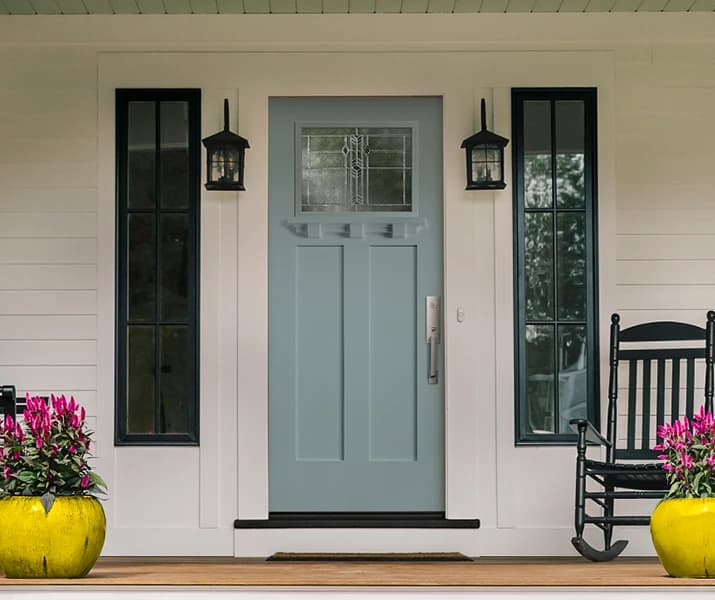
Color. A door in a contrasting color against the siding is the single highest-impact change. Dark colors on light siding, or a deep red, navy, or black door on a neutral house, read as intentional from the street.
Style match. A craftsman door with a top window and dentil shelf suits a bungalow; a six-panel suits a colonial; a flush modern slab suits a ranch with clean lines. Mismatched style is what makes a new door look wrong even when it is high quality.
Glass. Sidelights and a transom brighten the entry inside and make the opening feel larger outside. They also add cost and reduce privacy, so frosted or decorative glass is a common compromise.
Hardware. A quality handleset in a finish that matches the light fixtures and house numbers is a small expense that finishes the look.
If you are also planning new siding, pick the door and siding colors together. Our vinyl versus fiber cement siding guide covers the material side of that project.
What a Good Installation Looks Like
A door is only as good as its install. The slab can be perfect and the result still drafty if the frame is not set right. On every door we install:
- Remove the old unit down to the rough opening rather than wrapping a new frame over a rotted one.
- Check and repair the subfloor and framing at the sill. Rot here is common on older homes and is where most draft and water problems start.
- Set the new prehung unit plumb, level, and square, shimmed at the hinge and strike points so the door swings true and latches without lifting.
- Flash and seal the opening: sill pan or flashing tape at the bottom, low-expansion foam at the gaps, exterior caulk at the trim.
- Adjust the threshold and strike so the door compresses the weatherstripping evenly on all three sides.
- Install the hardware and deadbolt with long screws into the framing, not just the jamb.
That last point matters for security. A deadbolt is only as strong as the strike plate behind it. Short screws into a thin jamb give way with one kick; three-inch screws into the stud do not.
Storm Doors and Garage Doors
Storm doors add a second layer of glass and weatherstripping in front of the entry door. They help on an older door, and they let you leave the main door open for ventilation in spring and fall. On a new insulated fiberglass or steel door they add less than people expect, and a dark entry door behind a full-glass storm door can overheat in direct sun, which can damage the finish. Ask before pairing them.
Garage doors are the other door that changes the look of a house, and on many homes they are the biggest single feature on the front. An insulated garage door in a style that matches the entry door is often the second half of a curb appeal project. We install those too.
Common Questions
Can I replace just the door slab and keep the frame?
Only if the frame is sound, square, and the new slab is an exact match in size and hinge placement. In practice most replacements on homes more than fifteen years old are full prehung units, because the old frame is where the problems are.
How long does an entry door replacement take?
A standard prehung entry door is a half-day job. Doors with sidelights, or openings that need framing repair, can take a full day.
Is fiberglass really better than steel for a front door?
For a front door that takes weather and gets seen, yes. Fiberglass does not dent or rust and holds a stain finish well. Steel is the better value for secondary doors where looks matter less and security matters more.
Will a new front door increase my home's value?
Entry door replacement consistently ranks among the exterior projects with the highest return on cost in national remodeling surveys, because the cost is modest and the visual impact is large. It will not add value the way a new roof does, but it rarely fails to pay for itself at resale.
Do you handle the old door?
Yes. Removal and disposal of the old door and frame is included.
HomeAid Exteriors has served Fort Wayne and northeast Indiana since 2013 with entry door, patio door, storm door, and garage door replacement, along with windows, siding, roofing, and gutters. Financing is available.
Get a Free Door Estimate
We measure the opening, check the frame and sill, and give you a straight price on steel, fiberglass, or wood. Call (260) 385-6968.
Window & Door Replacement
Entry doors, patio doors, storm doors, garage doors, and energy efficient replacement windows for Fort Wayne and northeast Indiana.